
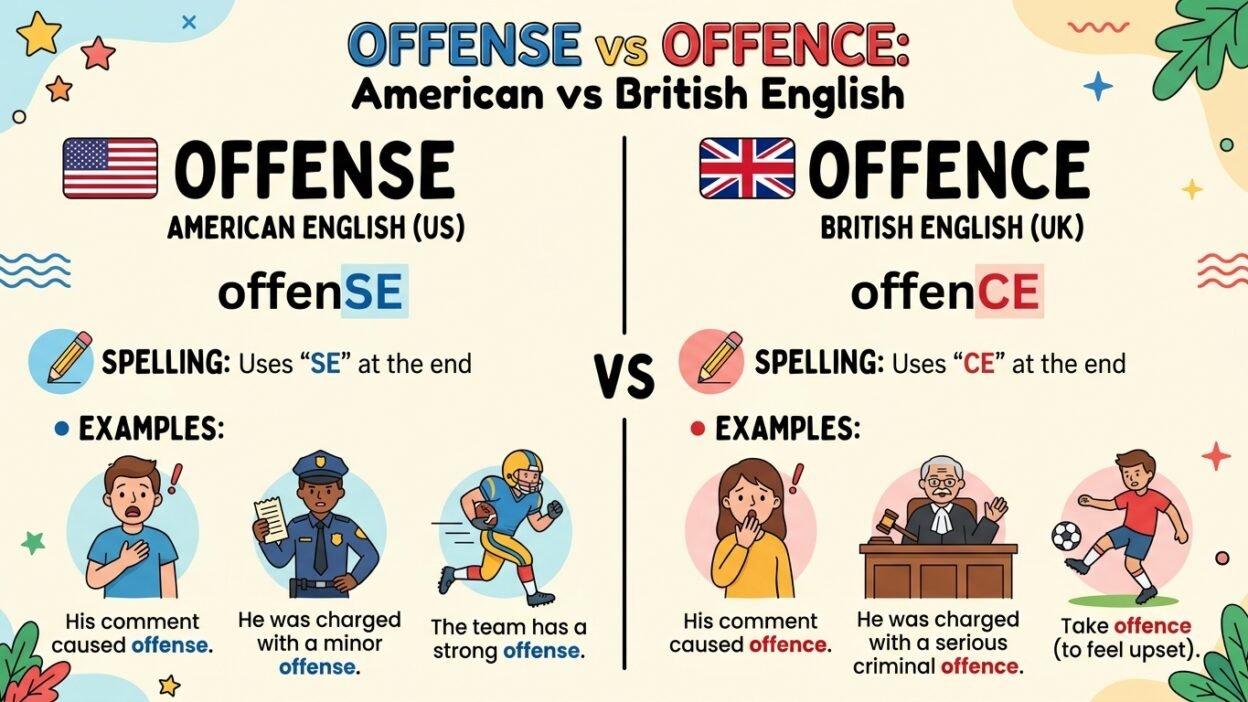
Many learners feel confused about “offense” and “offence.” These two words look very similar and sound exactly the same. The only difference is one letter: “c” or “s.”
So which one is correct?
The simple answer is: both are correct, but they are used in different types of English.
Let’s make it clear and easy to understand.
Quick Answer
- ✅ Offense = American English spelling
- ✅ Offence = British English spelling
- Both have the same meaning
Examples:
- He took offense at the comment. ✅
- He took offence at the comment. ✅
👉 Same meaning, different spelling styles
Simple Origin or Background Explanation
The word comes from Latin and entered English many years ago.
Over time, English developed two main spelling systems:
- American English → prefers “s” (offense)
- British English → prefers “c” (offence)
This pattern is common:
- defense / defence
- license / licence
- practice / practise (in some cases)
👉 The difference is about spelling style, not meaning
Clear Explanation of the Difference
What does “offense” mean?
“Offense” means:
- Something that makes someone upset or hurt
- A crime or rule breaking action
This spelling is used in:
- American English
Examples:
- She took offense at his words.
- The act was a serious offense.
What does “offence” mean?
“Offence” has the same meanings:
- Something that causes hurt or anger
- A crime or wrongdoing
This spelling is used in:
- British English
Examples:
- He meant no offence.
- It is a legal offence.
Key Idea
- Offense = American spelling
- Offence = British spelling
👉 Meaning is exactly the same
Comparison Table
| Feature | Offense ✅ | Offence ✅ |
|---|---|---|
| Meaning | Same | Same |
| Spelling style | American English | British English |
| Letter | “s” | “c” |
| Usage | USA | UK and others |
| Recommended | Based on style | Based on style |
Which One to Use and When
Use “offense” when:
- Writing in American English
- Writing for an American audience
Examples:
- That comment caused offense.
- It is a criminal offense.
Use “offence” when:
- Writing in British English
- Following international or British style rules
Examples:
- No offence was intended.
- It is a serious offence.
Simple Rule
👉 American English → offense
👉 British English → offence
Common Mistakes People Make
1. Thinking one is wrong
Many learners think only one spelling is correct.
👉 Both are correct
2. Mixing spelling styles
❌ The offence caused offense.
👉 Choose one style and stay consistent
3. Forgetting the pattern
British English often uses “c”:
- offence
- defence
4. Not considering the audience
Think about who will read your writing
Everyday Real Life Examples
In Emails
- I did not mean any offense.
- Please take no offence.
In News
- The player committed an offense.
- It is a punishable offence.
On Social Media
- No offense, but I disagree
- No offence intended 😄
In Daily Conversation
- He took offense quickly.
- She meant no offence.
Short Learning Section for Students and Beginners
Trick 1: S vs C
👉 offense = “s” → American
👉 offence = “c” → British
Trick 2: Think of Similar Words
- defense / defence
- license / licence
Trick 3: Stay Consistent
👉 Do not mix both spellings
Practice Sentences
Fill in the blank:
- He took ______ at the joke.
- It is a serious legal ______.
- No ______ was intended.
Answers:
- offense or offence (choose one style)
FAQ
1. Are “offense” and “offence” the same?
Yes, they have the same meaning.
2. Which one is correct?
Both are correct.
3. Which is more common worldwide?
“Offence” is common in British-style English.
4. Which should I use in exams?
Follow your system (often British → offence).
5. Is “offense” wrong?
No, it is correct in American English.
6. Why is there a spelling difference?
Because of American and British English styles.
7. Can I use both in one text?
No, choose one style and stay consistent.
8. What is the safest option?
Follow one spelling system consistently.
Conclusion
The difference between “offense” and “offence” is very simple.
- Both are correct
- Both mean the same thing
- The only difference is spelling style
👉 Offense = American English
👉 Offence = British English
Choose the style you are using and stay consistent. This will make your writing clear and correct.