Many learners feel confused about “dialog” and “dialogue.” These words look very similar, and both are used in English. Because of this, it can be hard to know which one is correct.
The good news is simple: both spellings are correct, but they are used in different situations and styles.
Let’s make it clear in a very easy way.
Quick Answer
- ✅ Dialogue = standard and most common spelling
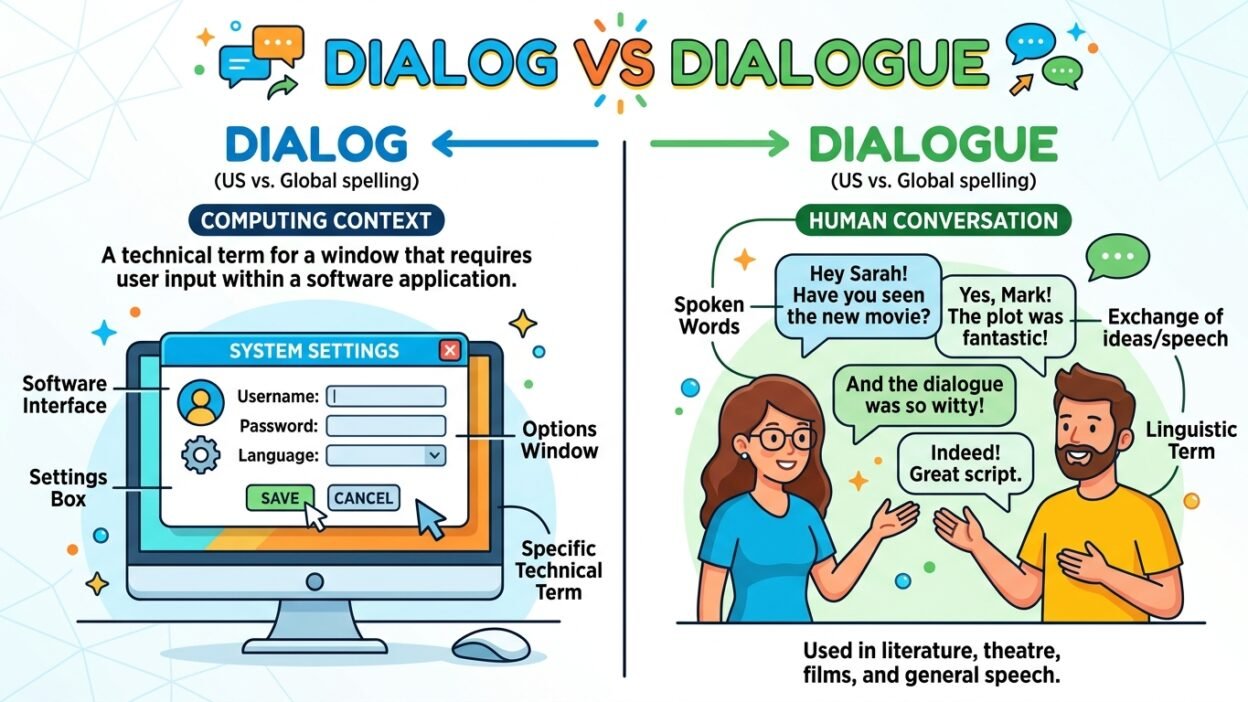
- ✅ Dialog = shorter form, mainly used in American English (especially in technology)
- Both have the same meaning
Examples:
- The movie has great dialogue. ✅
- Open the settings dialog box. ✅
👉 Use dialogue in most general writing
Simple Origin or Background Explanation
The word comes from Greek and means:
👉 a conversation between people
Over time, English developed two forms:
- Dialogue → traditional spelling
- Dialog → shorter version, used more in modern or technical contexts
British English keeps the longer form:
👉 dialogue
American English sometimes uses the shorter form:
👉 dialog (especially in computing)
Clear Explanation of the Difference
What does “dialogue” mean?
“Dialogue” means:
- A conversation between two or more people
- Spoken lines in a book, movie, or play
This is the most common spelling in everyday English.
Examples:
- The film has natural dialogue.
- The teacher encouraged open dialogue.
👉 Used in:
- Writing
- Movies
- Books
- Daily communication
What does “dialog” mean?
“Dialog” has the same basic meaning, but it is mostly used in:
- American English
- Computer or technical language
Examples:
- A dialog box appeared on the screen.
- Open the file dialog.
👉 It is less common in normal writing
Key Idea
- Dialogue = general and standard
- Dialog = technical or American usage
Comparison Table
| Feature | Dialogue ✅ | Dialog ✅ |
|---|---|---|
| Meaning | Same | Same |
| Spelling style | Traditional | Shorter form |
| Usage | General writing | Technical/US usage |
| Common in | Books, movies | Computer terms |
| Recommended | Yes | Limited use |
Which One to Use and When
Use “dialogue” when:
- Writing essays
- Writing stories
- Talking about conversations
- General communication
Examples:
- The story has strong dialogue.
- Good dialogue helps understanding.
Use “dialog” when:
- Talking about computer interfaces
- Writing technical content
- Referring to software features
Examples:
- Click OK in the dialog box.
- The dialog window opened.
Simple Rule
👉 Everyday writing → dialogue
👉 Technology/computers → dialog
Common Mistakes People Make
1. Thinking one is wrong
Many learners think one spelling is incorrect.
👉 Both are correct
2. Using “dialog” in essays
It may look too informal or technical.
3. Mixing both forms
❌ The dialogue and dialog are important.
This looks inconsistent.
4. Not knowing context
Always check:
- Is it general writing? → dialogue
- Is it technical? → dialog
Everyday Real Life Examples
In Emails
- We need open dialogue to solve this issue.
- Please close the dialog box.
In News
- Leaders started a peaceful dialogue.
- The software shows a warning dialog.
On Social Media
- This movie has amazing dialogue 😄
- Click the dialog to continue
In Daily Conversation
- Good dialogue helps people understand each other.
- The app shows a dialog when you save.
Short Learning Section for Students and Beginners
Trick 1: Longer = General
👉 Dialogue = everyday use
Trick 2: Shorter = Technical
👉 Dialog = computer use
Trick 3: Safe Choice
👉 Always use dialogue if unsure
Practice Sentences
Fill in the blank:
- The movie has great ______.
- Click OK in the ______ box.
- We need better ______ between people.
Answers:
- dialogue
- dialog
- dialogue
FAQ
1. Are “dialog” and “dialogue” the same?
Yes, they have the same meaning.
2. Which spelling is more common?
“Dialogue” is more common in general writing.
3. Is “dialog” correct?
Yes, especially in American and technical usage.
4. Which one should I use in exams?
Use “dialogue.”
5. Why is “dialog” used in computers?
Because it is shorter and simpler.
6. Can I use both in one sentence?
No, choose one and stay consistent.
7. What is the safest option?
👉 Dialogue
8. Is “dialogue” formal?
Yes, it works in both formal and informal writing.
Conclusion
The difference between “dialog” and “dialogue” is very simple.
- Both are correct
- Both mean the same thing
👉 Dialogue is standard and widely used
👉 Dialog is mainly used in technical contexts
If you are unsure, always choose “dialogue.” It is the safest and most common option.