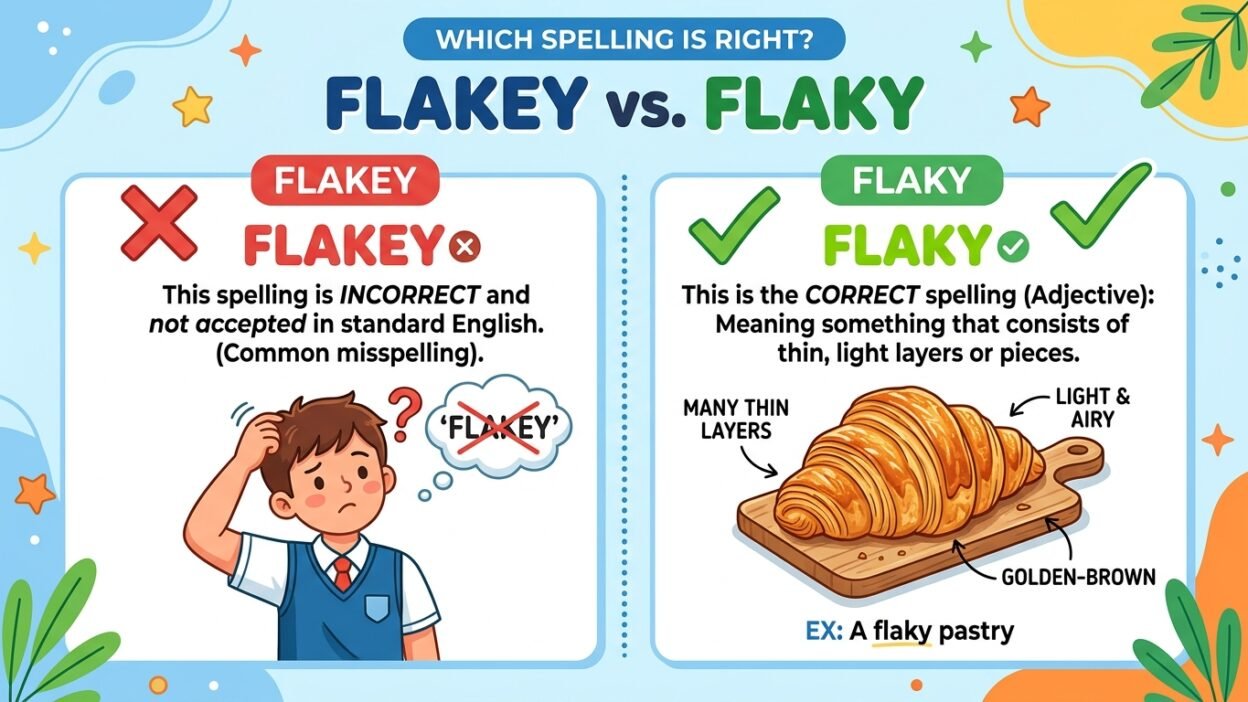
Many learners feel confused about “flakey” and “flaky.” These two words look almost the same, and both appear in writing, especially online. Because of this, people often wonder which one is correct.
This confusion is normal. English spelling can change over time, and sometimes more than one form exists. But in this case, one form is clearly better and more widely accepted.
Let’s make it simple and clear so you can use the correct spelling with confidence.
Quick Answer
- ✅ Flaky = correct and standard spelling
- ⚠️ Flakey = less common, not preferred
- Both can be understood, but only one is widely accepted
- Use “flaky” in writing, exams, and daily use
Example:
- This pastry is nice and flaky. ✅
- This pastry is nice and flakey. ⚠️ (not preferred)
Simple Origin or Background Explanation
The word “flaky” comes from the noun “flake.”
A “flake” is a small, thin piece that comes off something.
For example:
- Snow falls in flakes
- Pastry breaks into small flakes
When we add -y to “flake,” we get “flaky,” which means:
👉 full of flakes or easily breaking into small pieces
Over time, some people started writing “flakey” by adding “-ey” instead of “-y.” This sometimes happens in English, but it is not the standard pattern here.
So:
👉 “Flaky” follows the normal rule
👉 “Flakey” is a variation, but not the main form
Clear Explanation of the Difference
What does “flaky” mean?
“Flaky” has two main meanings:
1. Physical meaning (food or texture)
It describes something that breaks into thin layers or small pieces.
Examples:
- The bread is soft and flaky.
- This biscuit is very flaky.
2. Informal meaning (people or behavior)
It can describe a person who is:
- Not reliable
- Changes plans often
- Does not keep promises
Examples:
- He is a bit flaky; he cancels plans a lot.
- Don’t be flaky, be on time.
What does “flakey” mean?
“Flakey” has the same meaning as “flaky,” but it is not the standard spelling.
Some people use it, but it is:
- Less common
- Not preferred in formal writing
Key Point
👉 Meaning = same
👉 Spelling preference = different
- Flaky = correct and standard
- Flakey = uncommon and not recommended
Comparison Table
| Feature | Flaky ✅ | Flakey ⚠️ |
|---|---|---|
| Meaning | Same | Same |
| Spelling | Standard | Non-standard |
| Usage | Very common | Less common |
| Recommended | Yes | No |
| Example | Flaky pastry | Flakey pastry ⚠️ |
Which One to Use and When
Use “flaky” in all situations
You should use “flaky” when writing:
- School assignments
- Emails
- Social media posts
- Daily communication
Examples:
- This cake is light and flaky.
- He seems flaky sometimes.
Avoid using “flakey”
Even though people may understand it, it is better to avoid “flakey”.
👉 Always choose “flaky” for correct and clear writing
Simple Rule
If you are unsure:
👉 Always use flaky
Common Mistakes People Make
1. Adding extra “e”
❌ Flakey
✅ Flaky
Many learners think adding “e” is correct, but it is not needed.
2. Following incorrect examples online
Sometimes people copy what they see online, even if it is not correct.
3. Thinking both are equally correct
While both can be understood, only “flaky” is widely accepted.
4. Mixing spellings
❌ This flaky bread is better than that flakey one.
This looks inconsistent.
✅ Use one form:
- This flaky bread is better than that flaky one.
Everyday Real Life Examples
In Emails
- The pastry you made was very flaky and delicious.
- Please don’t be flaky about meeting times.
In News
- The baker is known for his flaky pastries.
- Some customers complained about flaky service.
On Social Media
- Love this pie! So flaky 😍
- Stop being flaky and reply to messages!
In Daily Conversation
- This samosa is really flaky.
- He is nice, but a bit flaky sometimes.
Incorrect Examples (for learning)
- ❌ This bread is flakey.
- ❌ She is very flakey.
Correct them:
✔️ flaky
Short Learning Section for Students and Beginners
Here are easy tips to remember:
Tip 1: Keep it Simple
👉 Flaky (no extra “e”)
Tip 2: Think of “flake”
- Flake → Flaky
Just add -y, not -ey
Tip 3: One Safe Choice
If you remember only one spelling, make it:
👉 flaky
Practice Sentences
Fill in the blank:
- This biscuit is very ______.
- He is a bit ______ and forgets plans.
- The crust is light and ______.
Answers:
- flaky
- flaky
- flaky
FAQ
1. Is “flakey” wrong?
It is not completely wrong, but it is not the standard spelling.
2. Which one should I use?
You should use “flaky” in all cases.
3. Do both words mean the same thing?
Yes, they have the same meaning.
4. Is “flaky” formal or informal?
It can be used in both formal and informal situations.
5. Why do people write “flakey”?
Because they think adding “-ey” is correct, or they copy others.
6. Can I use “flakey” in exams?
It is better not to. Use “flaky.”
7. What is the easiest way to remember?
Think:
👉 Flake → Flaky
8. Is “flaky” used for people?
Yes, it can describe someone who is not reliable.
Conclusion
The difference between “flakey” and “flaky” is simple.
- Both have the same meaning
- The difference is spelling
👉 Flaky is correct and widely used
👉 Flakey is less common and not preferred
To avoid mistakes, always choose “flaky.” It is simple, clear, and accepted everywhere.
With this easy rule, you can write confidently and correctly every time.