
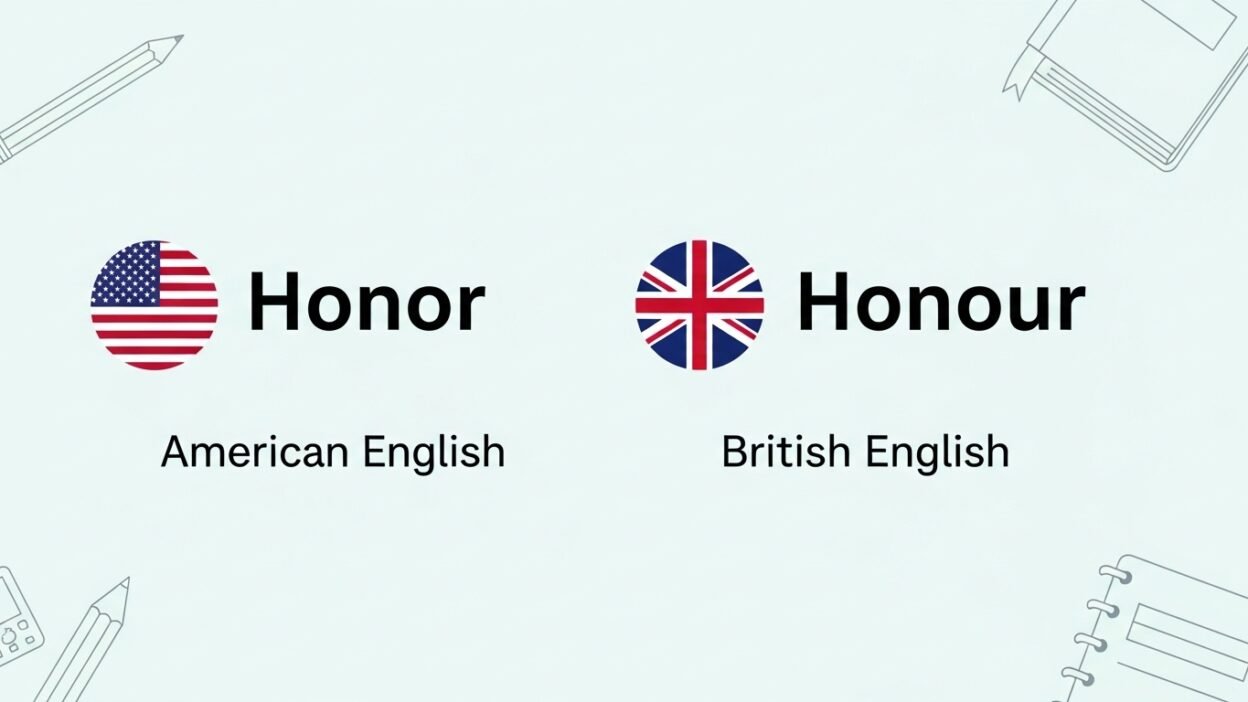
Many students and English learners feel confused between honor and honour. Both words look almost the same. The only difference is one extra letter: “u.”
You may see honor in some books and honour in others. So which one is correct? Should you use one or both?
The good news is simple: both spellings are correct. The difference depends on whether you use American English or British English.
This guide will explain everything clearly in very easy English.
Quick Answer: Honor vs Honour
Here is the simple answer:
- ✅ Honor is American English spelling.
- ✅ Honour is British English spelling.
- Both words have the same meaning.
- The only difference is spelling, not meaning or pronunciation.
So:
- Use honor in American English.
- Use honour in British English.
Simple Background: Why Are There Two Spellings?
English is used in many countries. Over time, spelling changed in different places.
In the United States, many words were shortened. The letter “u” was removed from some words.
In the United Kingdom, the original spelling with “u” stayed the same.
This is why we now have two versions.
Other examples:
- Color (US) / Colour (UK)
- Favorite (US) / Favourite (UK)
- Humor (US) / Humour (UK)
- Honor (US) / Honour (UK)
What Does Honor/Honour Mean?
Both words mean the same thing.
Honor or honour means:
- Respect
- High respect for someone
- Doing what is right
- Showing honesty and good character
Example meanings:
- Respect for a person
- Pride in doing something good
- Showing appreciation
Clear Explanation of the Difference
The only difference is spelling style.
Honor (American English)
- Used in American English.
- No letter “u.”
- Common in the United States.
Example:
- “It is an honor to meet you.”
Honour (British English)
- Used in British English.
- Includes the letter “u.”
- Common in the UK and many other countries.
Example:
- “It is an honour to meet you.”
Easy Comparison Table
| Feature | Honor | Honour |
|---|---|---|
| Meaning | Respect | Respect |
| Spelling Style | American English | British English |
| Used In | United States | United Kingdom and others |
| Pronunciation | Same | Same |
| Correct? | Yes | Yes |
Both spellings are correct.
Which One Should You Use and When?
Use depends on the type of English you follow.
Use “Honor” When:
- Writing in American English.
- Studying American textbooks.
- Writing for U.S. schools or exams.
- Writing for American audiences.
Example:
- “She received an honor award.”
Use “Honour” When:
- Writing in British English.
- Studying in British-based schools.
- Writing for UK exams.
- Following British spelling rules.
Example:
- “He fought with honour.”
Important Tip: Stay Consistent
Do not mix both spellings in the same document.
Wrong:
- “It is an honor and a great honour.”
Correct (American):
- “It is an honor and a great privilege.”
Correct (British):
- “It is an honour and a great privilege.”
Common Mistakes People Make
Mistake 1: Thinking One Is Wrong
Both spellings are correct. The difference is regional.
Mistake 2: Mixing Spelling Styles
Choose one style and use it consistently.
Mistake 3: Thinking Meaning Changes
The meaning does not change.
Honor and honour mean exactly the same thing.
Everyday Real Life Examples
Example 1: Award Ceremony
American English:
“It is an honor to receive this award.”
British English:
“It is an honour to receive this award.”
Example 2: School Writing
American style:
“She graduated with honor.”
British style:
“She graduated with honour.”
Example 3: Email Message
“It was an honor to work with you.”
This is common in American English.
Example 4: News Article
“The soldier was honoured for bravery.”
British spelling is used.
Learning Section for Students and Beginners
Key Vocabulary
- Respect = showing admiration.
- Spelling = how a word is written.
- American English = English used in the U.S.
- British English = English used in the UK.
Simple Practice Questions
- Which spelling is American English?
Honor - Which spelling is British English?
Honour - Do they have different meanings?
No - Should you mix both spellings?
No
Easy Memory Trick
Think:
- American English removes the “u” honor
- British English keeps the “u” honour
Also remember:
Color Honor
Colour Honour
The pattern is the same.
(FAQ)
1. Are honor and honour pronounced differently?
No. They sound exactly the same.
2. Which spelling is correct?
Both are correct. It depends on American or British English.
3. Which spelling should students use?
Use the spelling style your school teaches.
4. Is “honorable” different?
American: honorable
British: honourable
5. Is the meaning different?
No. Both mean respect.
6. Is honor used in formal writing?
Yes. Both honor and honour are used in formal writing.
7. Can I use either spelling online?
Yes, but stay consistent.
Conclusion
The difference between honor and honour is very simple:
- Honor is American English spelling.
- Honour is British English spelling.
- Both words mean respect.
- Both are correct.
Just choose one spelling style and use it consistently.
Now you can use honor or honour correctly and confidently in your writing.