
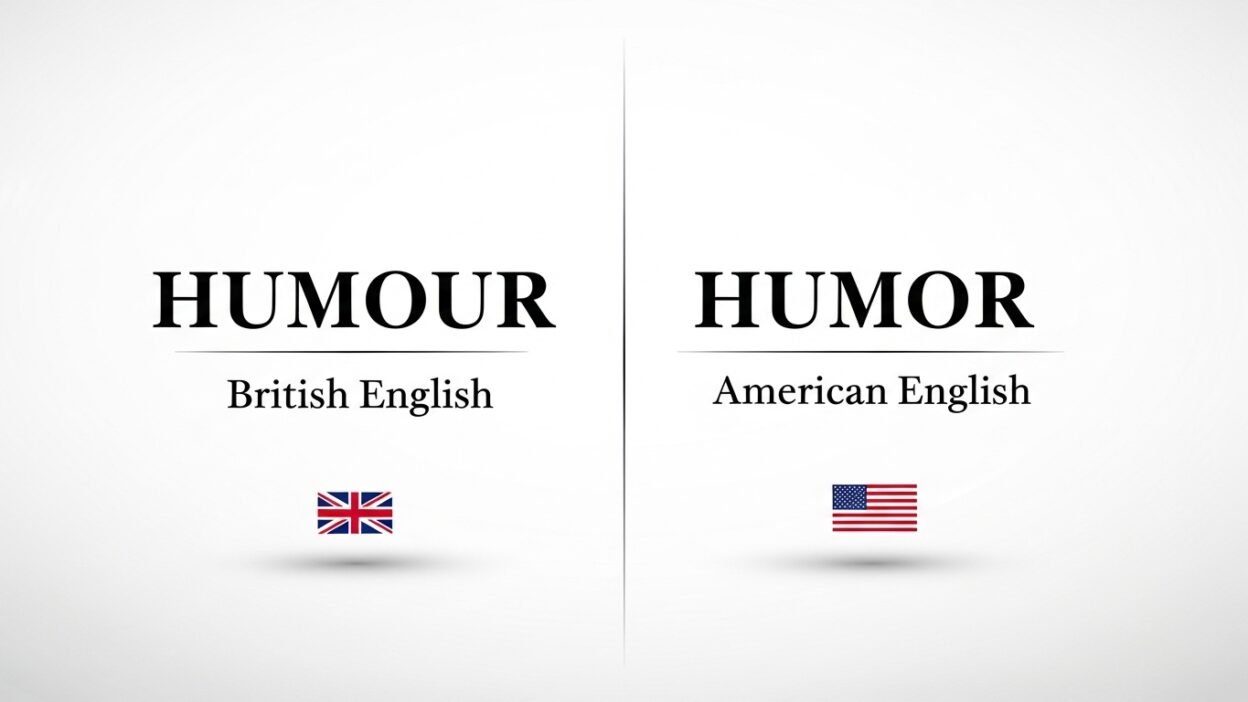
Many people feel confused between humour and humor. They look almost the same. They sound exactly the same when spoken. So why are there two spellings?
Students and ESL learners often ask:
- Which one is correct?
- Are they different words?
- Should I use one in school and another online?
The good news is this: both words are correct. The difference is mainly about British English and American English.
This guide will explain everything in very simple English so you never feel confused again.
Quick Answer: Humour or Humor?
Here is the short and clear answer:
- ✅ Humor is the American English spelling.
- ✅ Humour is the British English spelling.
- Both words mean the same thing.
- The difference is only spelling, not meaning.
So:
- In the United States use humor.
- In the United Kingdom and many other countries use humour.
Simple Background: Why Are There Two Spellings?
English is spoken in many countries. Over time, spelling changed in different places.
In American English:
- Words are often shorter.
- The “-our” ending becomes “-or.”
In British English:
- The original spelling “-our” is kept.
This pattern is common in many words.
Examples:
| American English | British English |
|---|---|
| Color | Colour |
| Favorite | Favourite |
| Honor | Honour |
| Humor | Humour |
So humour and humor follow the same pattern.
Clear Explanation of the Difference
Let’s explain it clearly and simply.
What Does “Humor/Humour” Mean?
The word means:
- The ability to make people laugh.
- Something funny.
- A mood or feeling (in some cases).
Example sentences:
- “She has a great sense of humor.”
- “The movie is full of humour.”
- “I enjoy your humor.”
- “British humour is often dry.”
All of these sentences mean the same thing.
The meaning does NOT change.
The Only Real Difference
The only difference is spelling style:
- Humor → American English
- Humour → British English
There is no change in pronunciation.
There is no change in meaning.
Easy Comparison Table
| Feature | Humor | Humour |
|---|---|---|
| Meaning | Funny quality | Funny quality |
| Used In | United States | United Kingdom |
| Pronunciation | Same | Same |
| Correct? | Yes | Yes |
| Example | Sense of humor | Sense of humour |
This makes it very clear.
Which One Should You Use and When?
It depends on where you are writing.
Use “Humor” If:
- You are writing for an American audience.
- You are studying American English.
- Your school uses American spelling.
- You are writing for U.S. exams.
Example:
- “The teacher has a good sense of humor.”
Use “Humour” If:
- You are writing in the UK.
- You follow British spelling rules.
- Your school uses British English.
- You are writing for international exams that prefer British spelling.
Example:
- “His humour makes everyone laugh.”
Important Tip
Do not mix both spellings in one document.
Wrong:
- “Her humor is clever and full of British humour.”
Choose one style and stay consistent.
Common Mistakes People Make
Let’s look at typical mistakes.
Mistake 1: Thinking One Is Wrong
Both spellings are correct. The difference is regional.
Mistake 2: Mixing American and British Spelling
If you use “color,” do not write “humour.”
If you use “colour,” do not write “humor.”
Keep the same style throughout your writing.
Mistake 3: Thinking It Changes Meaning
The meaning stays the same.
Both words mean:
- Something funny
- The ability to laugh
Everyday Real Life Examples
Example 1: American Movie Review
“The film has smart humor and great characters.”
American spelling.
Example 2: British Newspaper
“The comedian is known for his dry humour.”
British spelling.
Example 3: Social Media Post
“I love your sense of humor!”
Most online users in the U.S. use this spelling.
Example 4: School Essay in the UK
“Humour plays an important role in literature.”
British style.
Learning Section for Students and Beginners
Let’s review the key ideas.
Vocabulary
- Spelling = how a word is written.
- American English = English used in the U.S.
- British English = English used in the UK.
- Consistent = not changing style.
Simple Practice Questions
- Which spelling is American?
Humor - Which spelling is British?
Humour - Do they have different meanings?
No - Should you mix both in one essay?
No
Easy Memory Trick
Think:
- Americans like shorter spellings humor.
- British keep the “u” humour.
Another trick:
Color Humor
Colour Humour
If your writing has “color,” use “humor.”
(FAQ)
1. Are humor and humour pronounced differently?
No. They sound the same.
2. Is one more correct than the other?
No. Both are correct. It depends on the country.
3. Which spelling should ESL students learn?
It depends on which English style your school teaches. Many international schools teach British English.
4. Is “humorous” spelled differently?
No. Both American and British English use:
- Humorous
There is no difference here.
5. Do other words follow this pattern?
Yes. Examples:
- Color / Colour
- Honor / Honour
- Labor / Labour
6. Can I use either spelling online?
Yes, but try to stay consistent in one post or article.
7. Does spelling affect meaning?
No. The meaning stays exactly the same.
Simple and Clear Conclusion
The difference between humor and humour is simple:
- Humor = American spelling.
- Humour = British spelling.
- Both mean the same thing.
There is no difference in meaning or pronunciation.
Just remember to stay consistent. Choose one style and use it throughout your writing.
Now the confusion is gone. You can write with confidence and enjoy a good sense of humor or humour anywhere in the world.