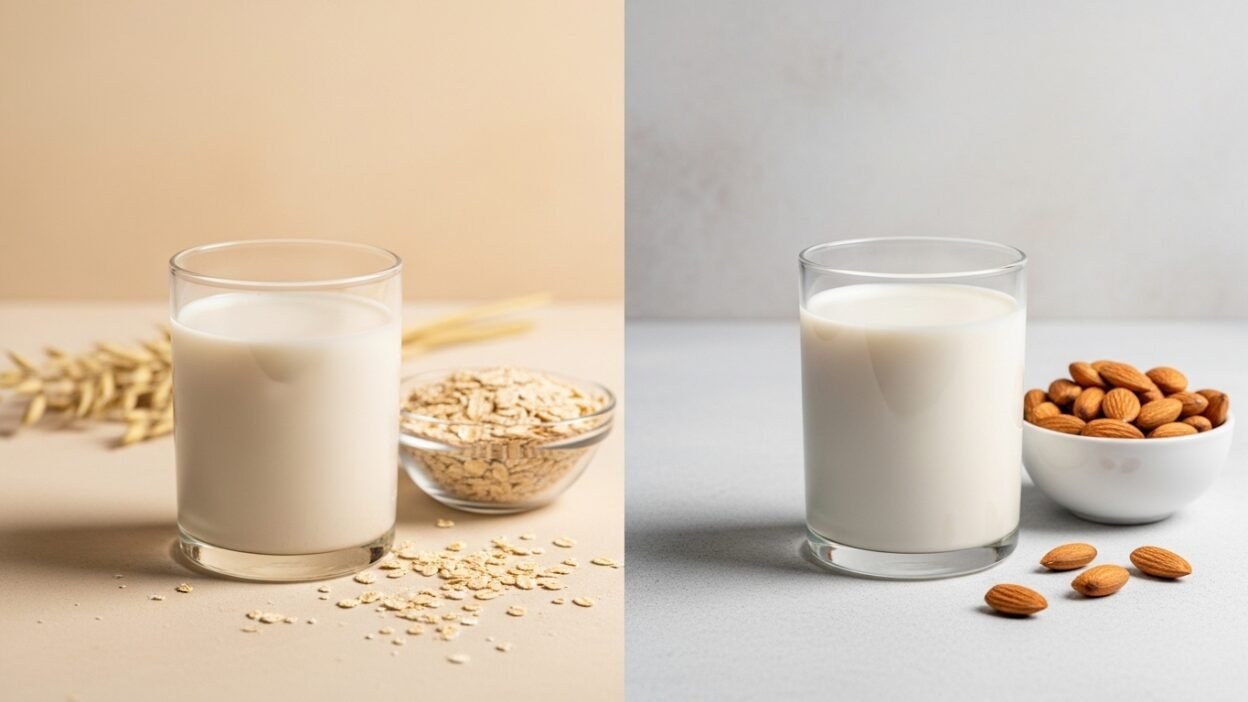
Many people feel confused when they see oat milk and almond milk in the store. Both are plant based drinks. Both are white. Both are used instead of cow’s milk. So what is the real difference?
Some people think they are almost the same. Others think one is healthier than the other. Some say one tastes better in coffee. Some say one is better for the planet.
This article will explain everything in very simple English. After reading, you will clearly understand the difference between oat milk and almond milk and know which one is right for you.
Quick Answer: Oat Milk vs Almond Milk
Here is the short and simple answer:
- Oat milk is made from oats and water.
- Almond milk is made from almonds and water.
- Oat milk is usually creamier and thicker.
- Almond milk is usually lighter and thinner.
- Oat milk has more natural carbs.
- Almond milk has fewer calories (in most brands).
- Almond milk tastes nutty.
- Oat milk tastes mild and slightly sweet.
That’s the basic difference. Now let’s understand it better.
Where Do They Come From?
Oat Milk
Oat milk is made from oats. Oats are grains. People eat oats as oatmeal for breakfast.
To make oat milk:
- Oats are mixed with water.
- The mixture is blended.
- The liquid is filtered.
- The final drink looks like milk.
Oat milk became very popular in the last 10–15 years. Many coffee shops started using it in drinks.
Almond Milk
Almond milk is made from almonds. Almonds are nuts.
To make almond milk:
- Almonds are soaked in water.
- They are blended.
- The liquid is filtered.
- The drink becomes smooth and white.
Almond milk has been popular for a longer time. Many people choose it as a dairy-free option.
The Clear Difference Between Oat Milk and Almond Milk
Let’s break it down in very simple points.
1. Taste
- Oat milk: soft, mild, slightly sweet.
- Almond milk: light, nutty, a little dry.
If you like a creamy and smooth taste, you may like oat milk.
If you like a light nut flavor, almond milk may be better.
2. Texture (How It Feels in Your Mouth)
- Oat milk is thicker and creamier.
- Almond milk is thinner and more watery.
This is important for coffee and cooking.
3. Calories
Most unsweetened almond milk has fewer calories than oat milk.
- Almond milk: usually low in calories.
- Oat milk: usually more calories because oats have more carbs.
If someone wants fewer calories, they often choose almond milk.
4. Carbohydrates
- Oat milk has more carbs because oats are grains.
- Almond milk has fewer carbs.
People watching their carb intake may prefer almond milk.
5. Protein
Both oat milk and almond milk usually have less protein than cow’s milk.
Some brands add extra protein. You should check the label.
6. Allergies
- Almond milk is made from nuts.
People with nut allergies cannot drink it. - Oat milk is usually safe for people with nut allergies.
However, some oat milk may contain gluten if not labeled gluten free.
7. Environment
Many people also think about the environment.
- Oats usually need less water to grow.
- Almond trees need a lot of water.
Some people choose oat milk because they believe it is more eco friendly.
Easy Comparison Table
| Feature | Oat Milk | Almond Milk |
|---|---|---|
| Main Ingredient | Oats (grain) | Almonds (nuts) |
| Taste | Mild, slightly sweet | Nutty, light |
| Texture | Creamy, thick | Thin, watery |
| Calories | Medium | Low (unsweetened) |
| Carbs | Higher | Lower |
| Good for Coffee? | Very good (foams well) | Good but less creamy |
| Safe for Nut Allergy? | Yes | No |
| Environmental Impact | Usually lower water use | High water use |
This table gives you a quick view of the difference.
Which One Should You Use and When?
There is no “best” milk. It depends on your needs.
Choose Oat Milk If:
- You like creamy texture.
- You drink a lot of coffee or lattes.
- You want a mild, sweet taste.
- You cannot eat nuts.
- You want a more eco-friendly option.
Choose Almond Milk If:
- You want fewer calories.
- You prefer a lighter drink.
- You like a nut flavor.
- You want lower carbs.
- You add milk to cereal or smoothies.
Common Mistakes People Make
Many beginners make small mistakes when choosing between oat milk and almond milk.
Mistake 1: Thinking All Brands Are the Same
Not true.
Some brands add:
- Sugar
- Oil
- Vitamins
- Flavors
Always check:
- “Unsweetened”
- Nutrition facts
- Ingredients list
Mistake 2: Thinking Plant Milk Is Always Healthier
Plant milk can be healthy, but it depends on:
- Added sugar
- Extra oils
- Your personal diet
More natural is usually better.
Mistake 3: Not Checking for Allergies
If you have:
- Nut allergy avoid almond milk.
- Gluten problem check oat milk label.
Mistake 4: Using the Wrong One for Cooking
Almond milk is thinner. It may not work well in creamy soups or sauces.
Oat milk is thicker and works better in:
- Creamy pasta
- Baking
- Coffee foam
Everyday Real Life Examples
Let’s see how people use oat milk and almond milk in daily life.
Example 1: Email at Work
“Hi team, please note that we now offer oat milk and almond milk for coffee in the office kitchen.”
Here, oat milk is often chosen for better foam in coffee.
Example 2: Social Media Post
“I switched from almond milk to oat milk, and my morning latte tastes so much better!”
This shows how texture matters.
Example 3: News Headline
“More Cafés Add Oat Milk to Their Menu.”
This happens because customers want plant based options.
Example 4: At the Grocery Store
Person A: “I need low calories.”
Person B: “Then choose unsweetened almond milk.”
Different needs different choices.
Learning Section for Students and Beginners
Let’s review in simple learning points.
Vocabulary
- Plant-based = made from plants.
- Creamy = thick and smooth.
- Nutty = tastes like nuts.
- Unsweetened = no added sugar.
- Carbs = energy from grains and sugars.
Simple Practice Question
Which milk:
- Is thicker?
- Has fewer calories?
- Is safe for nut allergy?
- Tastes nutty?
Answers:
- Oat milk
- Almond milk
- Oat milk
- Almond milk
Easy Memory Trick
Think:
- O = Oats = O for “Opaque and thick.”
- A = Almonds = A for “Airy and light.”
This helps you remember the difference.
FAQ
1. Is oat milk healthier than almond milk?
Not always. It depends on your diet. Oat milk has more carbs. Almond milk has fewer calories.
2. Which one is better for weight loss?
Unsweetened almond milk usually has fewer calories. Many people choose it for weight control.
3. Which one tastes better in coffee?
Many people prefer oat milk because it is creamier and foams well.
4. Can children drink oat milk or almond milk?
Yes, but children need enough nutrients. It is good to check with a doctor for young kids.
5. Do they both contain dairy?
No. Both are dairy-free.
6. Can I cook with both?
Yes. But oat milk is better for creamy dishes.
7. Which one lasts longer after opening?
Usually both last about 7 10 days in the fridge. Always check the package.
8. Is homemade better?
Homemade can be more natural because you control ingredients. But it may not last as long.
Conclusion:
Oat milk and almond milk are both good plant based choices. They are similar, but not the same.
Oat milk is:
- Creamier
- Slightly sweet
- Better for coffee and cooking
Almond milk is:
- Lighter
- Lower in calories
- Nutty in flavor
There is no perfect choice for everyone. The best milk is the one that fits your taste, health needs, and daily life.
Now you no longer need to feel confused. You understand the difference clearly and you can choose with confidence.

Austin Brandon serves as both an author and administrator at GrammerPeak. He manages site operations while creating clear, accurate grammar content that helps readers correct mistakes, understand language rules, and write with confidence, precision, and clarity across academic, professional, and everyday English communication.