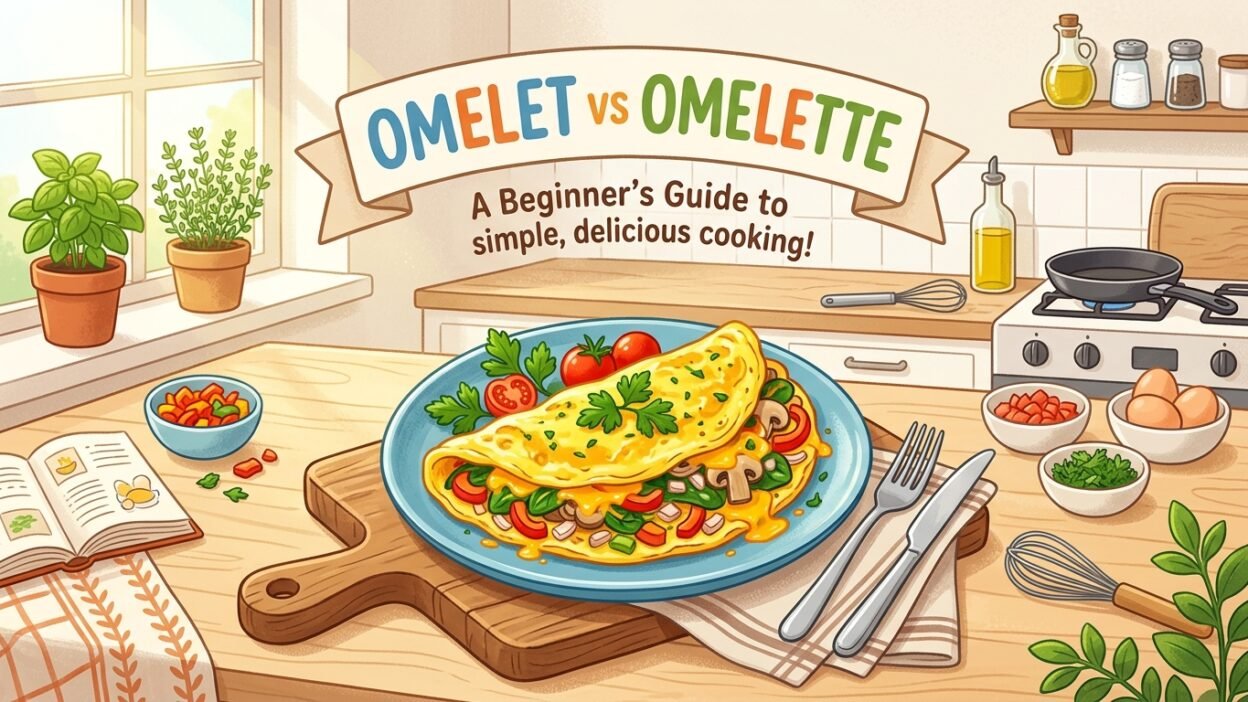
Many learners feel confused about “omelet” and “omelette.” These two words look different, but they refer to the same food.
The confusion usually comes from spelling. One form is shorter, and the other looks more complex. So which one should you use?
The answer is simple: both are correct, but they belong to different styles of English.
Quick Answer
- ✅ Omelet = American English spelling
- ✅ Omelette = British English spelling
- Both mean the same dish
Examples:
- I had an omelet for breakfast. ✅
- I had an omelette for breakfast. ✅
👉 Choose based on your spelling style
Simple Origin or Background Explanation
The word comes from French, where it is spelled:
👉 omelette
When English adopted the word, two main styles appeared:
- British English kept the original style → omelette
- American English simplified it → omelet
This is similar to:
- colour / color
- favourite / favorite
👉 The difference is about spelling, not meaning
Clear Explanation of the Difference
What does “omelet” mean?
“Omelet” is:
- The American English spelling
- A dish made from eggs, often with vegetables, cheese, or meat
Examples:
- I made a cheese omelet.
- She ordered an omelet.
👉 Common in the United States
What does “omelette” mean?
“Omelette” is:
- The British English spelling
- Also closer to the original French word
Examples:
- He cooked a vegetable omelette.
- She had an omelette for lunch.
👉 Common in the UK and many other countries
Key Idea
- Omelet = American spelling
- Omelette = British spelling
Comparison Table
| Feature | Omelet ✅ | Omelette ✅ |
|---|---|---|
| Meaning | Same | Same |
| Spelling style | American English | British English |
| Length | Shorter | Longer |
| Origin style | Simplified | French-based |
| Recommended | Based on style | Based on style |
Which One to Use and When
Use “omelet” when:
- Writing in American English
- Using a simpler spelling
Examples:
- I ate an omelet today.
- He cooked a ham omelet.
Use “omelette” when:
- Writing in British English
- Following traditional spelling
Examples:
- She made a cheese omelette.
- The menu includes an omelette.
Simple Rule
👉 American English → omelet
👉 British English → omelette
Common Mistakes People Make
1. Thinking one is wrong
Many learners think only one spelling is correct.
👉 Both are correct
2. Mixing styles
❌ I like omelet and omelette.
👉 Choose one style and stay consistent
3. Spelling confusion
“Omelette” has more letters, so it can be harder to spell.
4. Not knowing the audience
Think about who will read your writing.
Everyday Real Life Examples
In Menus
- Cheese omelet
- Vegetable omelette
In Emails
- I had an omelet for breakfast.
- I made an omelette this morning.
On Social Media
- Delicious omelet 😋
- Homemade omelette 🍳
In Daily Conversation
- I love a fresh omelet.
- She cooks a great omelette.
Short Learning Section for Students and Beginners
Trick 1: Short vs Long
👉 Omelet = shorter
👉 Omelette = longer
Trick 2: Think of English Style
- American → simple → omelet
- British → traditional → omelette
Trick 3: Stay Consistent
👉 Do not mix both spellings
Practice Sentences
Fill in the blank:
- I ate an ______ for breakfast.
- She cooked a cheese ______.
- The menu has a vegetable ______.
Answers:
- omelet or omelette (choose one style)
FAQ
1. Are “omelet” and “omelette” the same?
Yes, they refer to the same food.
2. Which spelling is correct?
Both are correct.
3. Which one is more common?
It depends on the region.
4. Which should I use in exams?
Follow the spelling style you are learning.
5. Why is “omelette” longer?
It comes from French.
6. Is “omelet” wrong?
No, it is correct in American English.
7. What is the safest option?
Choose one style and use it consistently.
8. Do they sound different?
No, they are pronounced the same.
Conclusion
The difference between “omelet” and “omelette” is very simple.
- Both are correct
- Both mean the same dish
👉 Omelet = American spelling
👉 Omelette = British spelling
Choose the style you prefer and stay consistent. That’s all you need to write correctly and clearly.

Austin Brandon serves as both an author and administrator at GrammerPeak. He manages site operations while creating clear, accurate grammar content that helps readers correct mistakes, understand language rules, and write with confidence, precision, and clarity across academic, professional, and everyday English communication.