
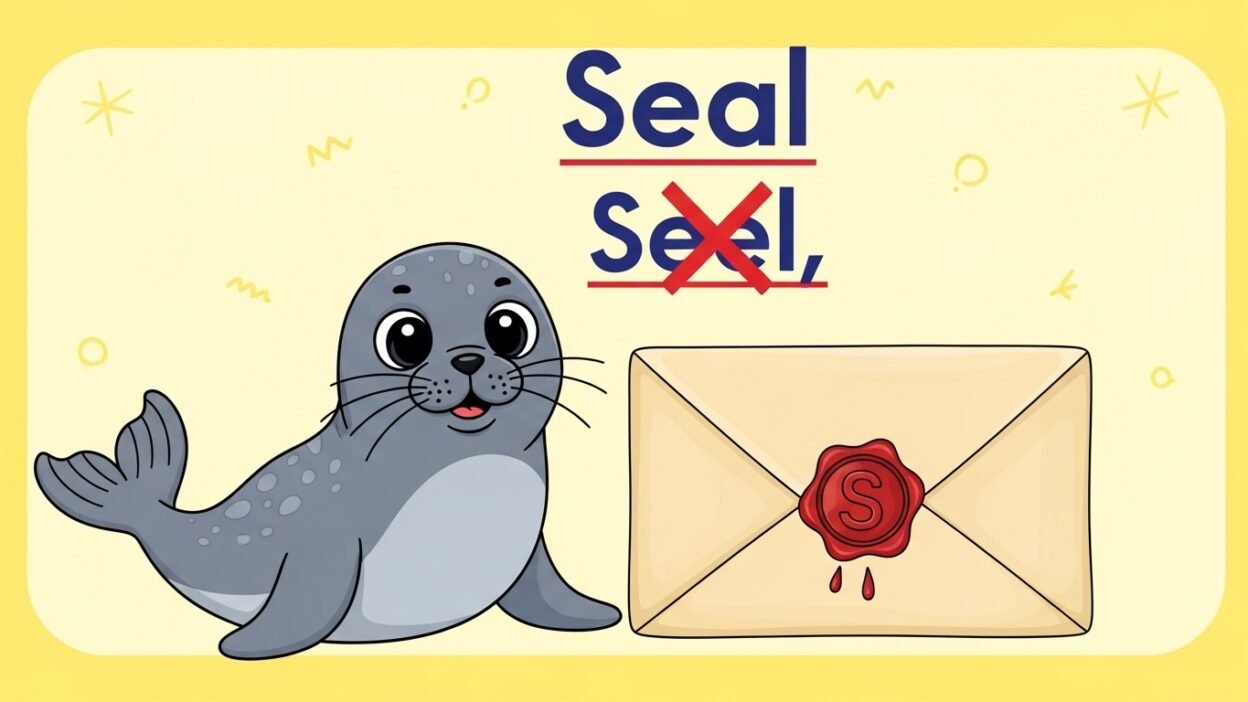
Many English learners become confused when they see the words seel and seal. At first glance, the words look almost the same. They sound very similar when spoken, and the difference in spelling is only one letter.
Because of this, students often wonder:
- Is seel a correct English word?
- Is seal the right spelling?
- Do these two words mean the same thing?
In most situations, the confusion happens because seal is a very common English word, while seel is extremely rare and almost never used in everyday writing.
This article will explain everything in simple English so you can understand the difference easily and remember it forever.
Quick Answer
Here is the short and simple answer:
- Seal is the correct and common English word.
- Seel is a very rare and old word that people almost never use today.
- Most of the time, if you want to write this word, you should write seal.
- Seal has several meanings, including an animal and the act of closing something tightly.
If you remember one thing, remember this:
Seal is the word you need in almost every situation.
Simple Origin and Background
The word seal has been part of English for hundreds of years. It comes from an old Germanic word related to closing or fastening something tightly.
Over time, the word developed several meanings. Today, seal can refer to:
- An animal that lives in the ocean
- The act of closing something tightly
- An official stamp used to show approval
Because this word has been used for such a long time, it appears in many everyday situations.
The word seel, however, comes from an old English term that meant to close the eyes of a bird during falcon training. This meaning is very old and is rarely used today.
That is why most modern English speakers never use the word seel.
Clear Explanation of the Difference
Let’s clearly understand how these two words are different.
1. Seal (Common Word)
Seal is a very common word in English. It has several meanings and is used in daily life.
Here are the main meanings:
1. To close something tightly
Example:
- Please seal the envelope.
- The jar is sealed tightly.
2. A marine animal
Example:
- The seal swam in the cold ocean.
- We saw seals at the zoo.
3. An official stamp
Example:
- The document has a government seal.
Because the word is used in many ways, it appears frequently in writing and conversation.
2. Seel (Rare Word)
Seel is an extremely rare word in modern English.
Historically, it meant:
- To close the eyes of a bird (usually in falconry)
Example from old writing:
- The trainer seels the bird to calm it.
Today, almost no one uses this word in normal conversation or writing.
Most people have never seen or used it.
For everyday English, you can safely ignore the word seel.
Comparison Table
Here is a simple table to help you see the difference clearly.
| Feature | Seal | Seel |
|---|---|---|
| Common in modern English | Yes | No |
| Used in daily writing | Very often | Almost never |
| Meaning | Close tightly, animal, official stamp | Old term related to birds |
| Safe for students and exams | Yes | No |
| Frequency of use | Very high | Extremely rare |
As you can see, seal is the word people actually use today.
Which One to Use and When
Now let’s answer the most important question:
Which word should you use?
Use “seal” when you mean:
- Closing something tightly
- Talking about the ocean animal
- Referring to an official stamp
- Talking about protecting something
Examples:
- Seal the bottle before putting it in the bag.
- The seal jumped into the water.
- The letter has the royal seal.
- This paint helps seal the wall.
These are normal and common uses.
Avoid using “seel”
Because the word seel is very old and uncommon, students and beginners should avoid using it.
Even many native speakers do not recognize it.
In almost every situation, seal is the correct choice.
Common Mistakes People Make
Let’s look at some mistakes learners often make.
1. Spelling “seal” incorrectly as “seel”
Incorrect:
- Please seel the envelope.
Correct:
- Please seal the envelope.
The correct spelling always uses ea, not ee.
2. Thinking “seel” is a modern word
Some students think seel is simply another spelling of seal. This is not true.
It is a separate and very old word.
3. Confusing pronunciation and spelling
Both words sound similar, but English spelling often works this way. Many words sound the same but have different spellings and meanings.
4. Using “seel” in school writing
Because the word is rare, using it in essays or exams may confuse readers.
It is better to use seal.
Everyday Real-Life Examples
Here are some examples of how the word seal appears in everyday life.
In Emails
- Please seal the package before shipping it.
- Make sure the container is sealed properly.
In News Articles
- Scientists studied a group of seals near the coast.
- The agreement was sealed after months of discussion.
On Social Media
- Look at this cute baby seal!
- I finally sealed the deal today!
In Daily Conversation
- Did you seal the bag?
- The seal at the aquarium was very playful.
- The company sealed a big contract.
These examples show how common the word seal is in everyday English.
Short Learning Section for Students and Beginners
Here is a simple trick to remember the correct spelling.
Think about the word seal and the sea.
A seal lives in the sea.
Both words contain the letters ea.
So remember:
Sea → Seal
This small connection can help you remember the spelling.
Quick Practice
Choose the correct word.
- Please ______ the envelope.
- The ______ swam in the ocean.
- The bottle is tightly ______.
Answers:
- seal
- seal
- sealed
In almost every case, the correct answer is seal.
FAQ
1. Is “seel” a real English word?
Yes, but it is extremely rare and very old. Most people never use it.
2. Is “seal” the correct spelling?
Yes. It is the standard and correct spelling used in modern English.
3. Can “seal” be both a noun and a verb?
Yes.
Noun:
- The seal is a marine animal.
Verb:
- Please seal the envelope.
4. How do you pronounce “seal”?
It is pronounced like seel, with a long “ee” sound.
5. Why does “seal” use “ea” instead of “ee”?
English spelling comes from many old languages, which is why some spellings may look unusual.
6. Should students ever use “seel”?
No. In normal writing and exams, it is better to avoid this word.
7. Is “seal” a common English word?
Yes. It is very common and appears in many everyday situations.
8. What is the past form of seal?
The past form is sealed.
Example:
- She sealed the envelope.
Conclusion
The difference between seel and seal is very simple once you understand it.
Seal is the common and correct word used in modern English. It can mean closing something tightly, an ocean animal, or an official stamp.
Seel is a very old and rare word that almost nobody uses today.
For students, beginners, and everyday writing, the rule is easy:
Always use seal.
Now you can write confidently without worrying about this spelling confusion again.