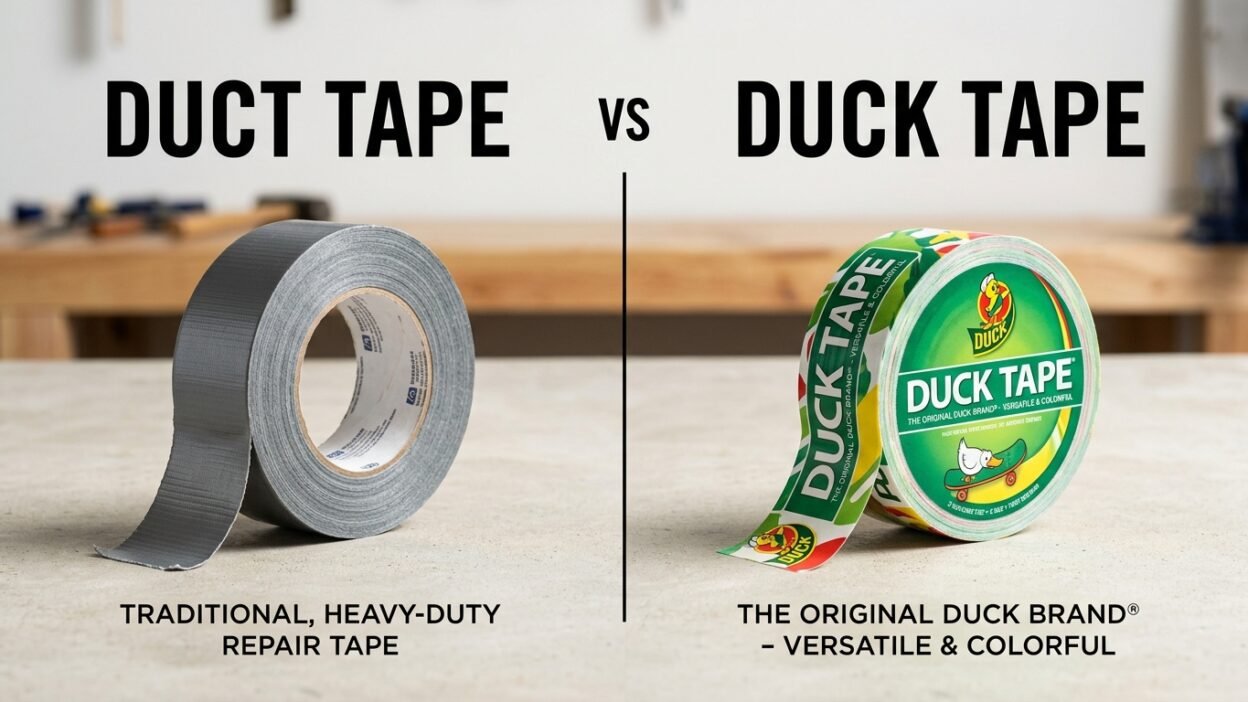
Many people feel confused about “duck tape” and “duct tape.” They sound the same when we say them, so it is easy to mix them up. You may have even seen both spellings online or in stores.
The truth is simple: one is the correct common word, and the other has a special use.
Quick Answer
- Duct tape = correct general term
→ strong tape used for fixing things - Duck Tape = a brand name
→ a company that makes duct tape
Simple Background
The name duct tape comes from its early use. It was first used in military work and later in air ducts (pipes that carry air). Over time, people started calling it “duct tape.”
The word duck in “duck tape” has two meanings:
- A type of cloth called cotton duck, used in early tape
- A brand name used by a company
This is why the confusion exists.
Clear Explanation of the Difference
What is “Duct Tape”?
Duct tape is the correct everyday term. It is:
- A strong, sticky tape
- Used for repairs, fixing, and holding things together
Examples:
- “Use duct tape to fix the pipe.”
- “I repaired the box with duct tape.”
What is “Duck Tape”?
Duck Tape (with capital letters) is:
- A brand name
- A company that sells duct tape and similar products
People sometimes write “duck tape” by mistake when they really mean “duct tape.”
Comparison Table
| Term | Type | Meaning | Example Sentence |
|---|---|---|---|
| Duct tape | Common noun | Strong tape for repairs | “I used duct tape to fix it.” |
| Duck Tape | Brand name | A company/product name | “I bought Duck Tape from the store.” |
Which One to Use and When
Use duct tape when:
- You are talking about the tape in general
- You are writing normally (school, emails, etc.)
Use Duck Tape when:
- You are talking about the brand specifically
Simple Tip to Remember
- Duct = fixing ducts (pipes)
- Duck = brand name or mistake
Common Mistakes People Make
1. Writing “duck tape” instead of “duct tape”
❌ “I need duck tape to fix this.”
✔ “I need duct tape to fix this.”
2. Not using capital letters for the brand
❌ “I bought duck tape.”
✔ “I bought Duck Tape.” (brand)
3. Thinking both are always correct
They are not. “Duct tape” is correct in most situations.
Everyday Real Life Examples
In Emails
- “Please bring duct tape for the repair work.”
- “We are using Duck Tape brand for this project.”
In News
- “Workers used duct tape to secure the area.”
On Social Media
- “Duct tape can fix almost anything 😂”
- “Just bought colorful Duck Tape!”
In Daily Life
- “I fixed the chair with duct tape.”
- “This Duck Tape roll is very strong.”
Short Learning Section for Students
Here is a simple way to remember:
Step 1: Learn the main meaning
- Duct tape = general item
- Duck Tape = brand
Step 2: Practice
- “I need duct tape.”
- “This is Duck Tape brand.”
Step 3: Watch spelling
Always check your writing, especially in exams.
Step 4: Use memory trick
Think:
Duct = repair tool
Duck = company name
FAQ
Is “duck tape” wrong?
Usually yes. It is only correct if you mean the brand Duck Tape.
Why do people say “duck tape”?
Because it sounds the same as “duct tape.”
Which one is correct in exams?
Use duct tape.
Is Duck Tape a real brand?
Yes, it is a company that makes tape products.
Can I use both in writing?
Only if you clearly mean the brand when using “Duck Tape.”
Which word is more common?
Duct tape is much more common.
How can I remember easily?
Think: duct = ducts (pipes), so it helps you remember the correct spelling.
Conclusion
The difference between duck tape and duct tape is simple once you understand it.
- Duct tape is the correct general word used everywhere.
- Duck Tape is a brand name and should only be used in that case.
If you remember one simple rule, you will never be confused again:
Use duct tape for general use, and Duck Tape only for the brand.