
Many English learners feel confused when they see the words “ingrained” and “engrained.” At first glance, the two words look almost the same. They only differ by one letter at the beginning: in- and en-.
Because the spelling is so similar, people often wonder if the words have different meanings. Some learners also think one spelling might be wrong.
In reality, both words exist in English, and they are closely connected. However, one form is much more common and preferred in modern English, while the other is rare.
Understanding the difference is not difficult. Once you learn the simple background of these words and see how they are used in real sentences, the confusion becomes clear.
This article explains the meaning of both words in very simple English, shows when to use each one, and gives helpful examples for students and beginners.
Quick Answer
Here is the simple explanation:
- Ingrained is the most common and widely accepted word.
- Engrained is an older or less common spelling.
- Both words usually mean something deeply fixed in the mind, habits, or behavior.
- In modern writing and speaking, “ingrained” is the safer and better choice.
Example:
- Good habits become ingrained over time.
- His fear of failure is ingrained in his thinking.
Most people today rarely use engrained.
Simple Origin or Background
To understand these words, it helps to look at where they came from.
Both ingrained and engrained are connected to the word grain.
In very old English, the word grain referred to a small part or tiny particle. It could also refer to color that goes deep into fabric.
When cloth was dyed in the past, the color sometimes went deep into the material and stayed there permanently. This strong color was described as ingrained.
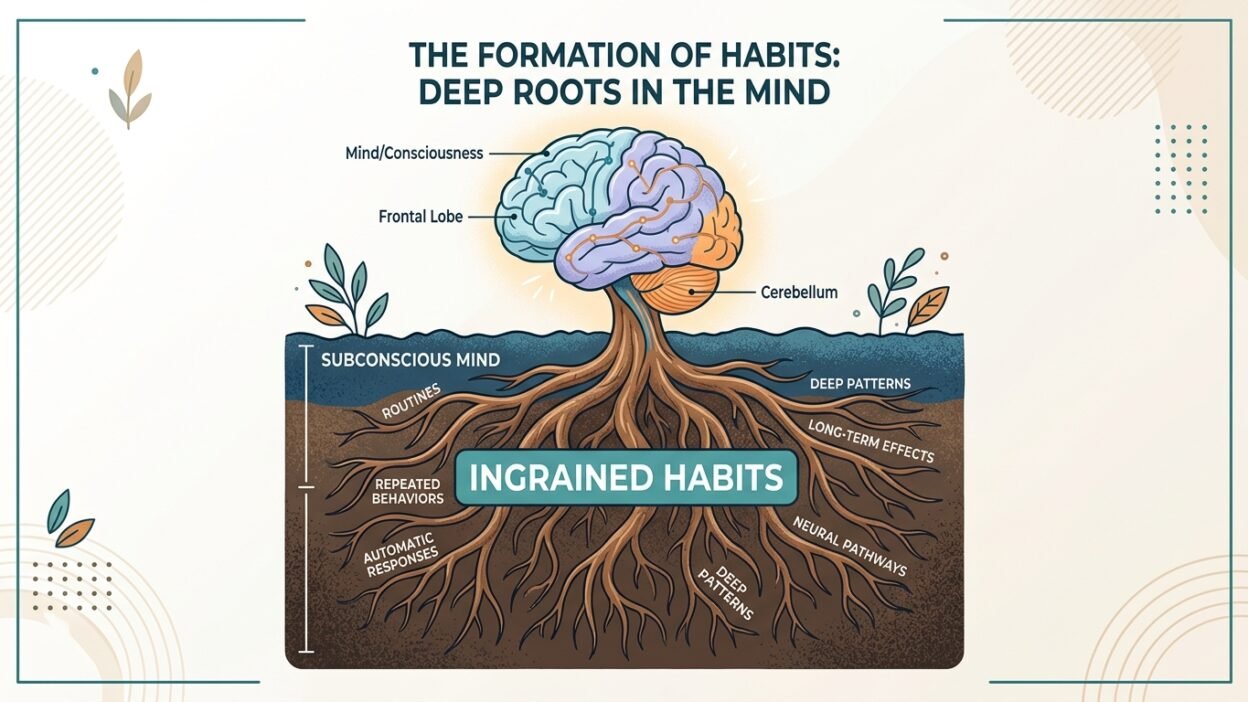
Over time, the meaning changed slightly. Instead of talking about cloth, people started using the word to describe ideas, habits, and beliefs that become deeply fixed in someone’s mind.
For example:
- a deeply ingrained habit
- ingrained beliefs
- ingrained cultural traditions
The spelling engrained appeared later as a variation, but ingrained became the standard form.
Today, most dictionaries and writers prefer ingrained.
Clear Explanation of the Difference
Even though the two words look different, their meanings are almost the same.
The real difference is how common they are in modern English.
What “ingrained” means
Ingrained describes something that becomes deeply fixed and very hard to change.
It is usually used for:
- habits
- beliefs
- attitudes
- behaviors
- traditions
Examples:
- Good manners should become ingrained in children.
- His love for music is ingrained in his life.
- The fear of failure can become ingrained in a person’s mind.
In all these sentences, the idea or habit is deeply rooted and does not change easily.
What “engrained” means
Engrained has the same basic meaning, but it is rarely used today.
Many people see it as an alternative or older spelling of ingrained.
Example:
- Her respect for teachers was engrained from childhood.
Even though this sentence is understandable, most writers would choose:
- Her respect for teachers was ingrained from childhood.
So the difference is mainly usage preference, not meaning.
Comparison Table
| Word | Meaning | How Common It Is | Example |
|---|---|---|---|
| Ingrained | Deeply fixed in habits or beliefs | Very common | Hard work is ingrained in his character. |
| Engrained | Same meaning as ingrained | Rare | Respect for elders was engrained in their culture. |
| Ingrained habits | Habits that are hard to change | Very common phrase | Waking up early became an ingrained habit. |
| Engrained habits | Same meaning but less used | Rare phrase | The rule was engrained in their system. |
This table shows that the meanings are almost identical, but one spelling is much more popular.
Which One to Use and When
If you want to write clearly and avoid confusion, it is best to follow a simple rule.
Use “ingrained” in most situations
This spelling is:
- more common
- widely accepted
- easily understood
Examples:
- Kindness should be ingrained in society.
- The habit of reading became ingrained in her daily life.
- Some traditions are deeply ingrained in culture.
Avoid “engrained” in modern writing
Even though it is not technically wrong, it is rare and sometimes confusing.
Some readers might even think it is a spelling mistake.
For this reason, most teachers and editors recommend using ingrained.
In simple terms:
Ingrained = standard choice
Engrained = uncommon alternative
Common Mistakes People Make
Because the words look similar, learners sometimes make mistakes when using them.
Mistake 1: Thinking the meanings are different
Some people believe ingrained and engrained have completely different meanings.
This is not true. Their meanings are basically the same.
The real difference is how often they are used.
Mistake 2: Using “engrained” by accident
Sometimes writers accidentally type engrained instead of ingrained.
Example mistake:
- The habit became engrained in his life.
Better version:
- The habit became ingrained in his life.
Mistake 3: Using the word for physical engraving
Some learners confuse these words with engrave, which means to cut words or designs into metal, wood, or stone.
Example:
- The artist engraved the design on the ring.
This is completely different from ingrained, which talks about ideas or habits in the mind.
Everyday Real-Life Examples
Let’s look at how ingrained appears in everyday situations.
In emails
Example:
- Our company believes honesty should be ingrained in every employee.
Another example:
- Customer service is ingrained in our company culture.
In news writing
Example:
- Respect for elders is deeply ingrained in many cultures.
Another example:
- Hard work is ingrained in the community’s traditions.
On social media
Example:
- Morning exercise has become ingrained in my routine.
Another example:
- Kindness should be ingrained in our daily actions.
In daily conversation
Example:
- Her love for learning is ingrained in her personality.
Another example:
- The habit of saving money was ingrained in him by his parents.
These examples show that ingrained is often used to describe long-term habits or values.
Learning Tips for Students and Beginners
If you are learning English, here are some easy ways to remember the correct word.
Tip 1: Remember the common spelling
The easiest choice is always:
ingrained
This spelling appears more often in books, articles, and conversations.
Tip 2: Think about habits
The word ingrained is usually connected with things like:
- habits
- beliefs
- values
- traditions
Example:
- honesty
- discipline
- kindness
Tip 3: Connect it with “deep”
A helpful memory trick is to think of ingrained as something that goes deep inside your mind or behavior.
Example:
- good manners
- respect
- responsibility
These things can become deeply ingrained.
Tip 4: Practice simple sentences
Try writing your own examples:
- Reading became an ingrained habit.
- Respect for teachers is ingrained in our culture.
- Saving money became ingrained in my routine.
Practice helps you remember the word naturally.
(FAQ)
1. Are “ingrained” and “engrained” the same?
Yes, they have almost the same meaning. However, ingrained is much more common today.
2. Which spelling should I use?
You should usually use ingrained because it is the standard spelling in modern English.
3. Is “engrained” incorrect?
No, it is not completely wrong. It is simply rare and less common.
4. What does “ingrained habit” mean?
An ingrained habit is a behavior that becomes very strong and hard to change.
Example:
- brushing teeth before bed
- waking up early
5. Can ingrained describe culture?
Yes. The word is often used for cultural traditions and beliefs.
Example:
- Respect for elders is deeply ingrained in many societies.
6. Is ingrained positive or negative?
It can be positive or negative.
Positive example:
- Kindness is ingrained in her personality.
Negative example:
- Fear of failure became ingrained in his thinking.
7. Is ingrained used in everyday English?
Yes. It is common in writing, conversations, news, and education.
8. Does ingrained mean permanent?
Not always permanent, but it usually means very difficult to change.
Conclusion
The words ingrained and engrained look almost identical, which is why many learners feel unsure about them. In truth, both words share the same basic meaning: something deeply fixed in habits, beliefs, or behavior.
However, modern English strongly prefers the spelling ingrained. It is the form most commonly used in books, conversations, and everyday writing.
While engrained still exists, it appears much less often and may confuse readers. For this reason, the safest and clearest choice is usually ingrained.
By remembering this simple rule, you can avoid mistakes and use the word confidently. With practice, you will quickly recognize how ingrained habits, beliefs, and traditions shape the way people think and act.