Many learners feel confused about “man” and “men.” These two words look similar, but they are used in different ways. The confusion usually comes from grammar, especially when learning singular and plural forms.
The good news is that this difference is very simple. Once you understand one small rule, you will never mix them again.
Quick Answer
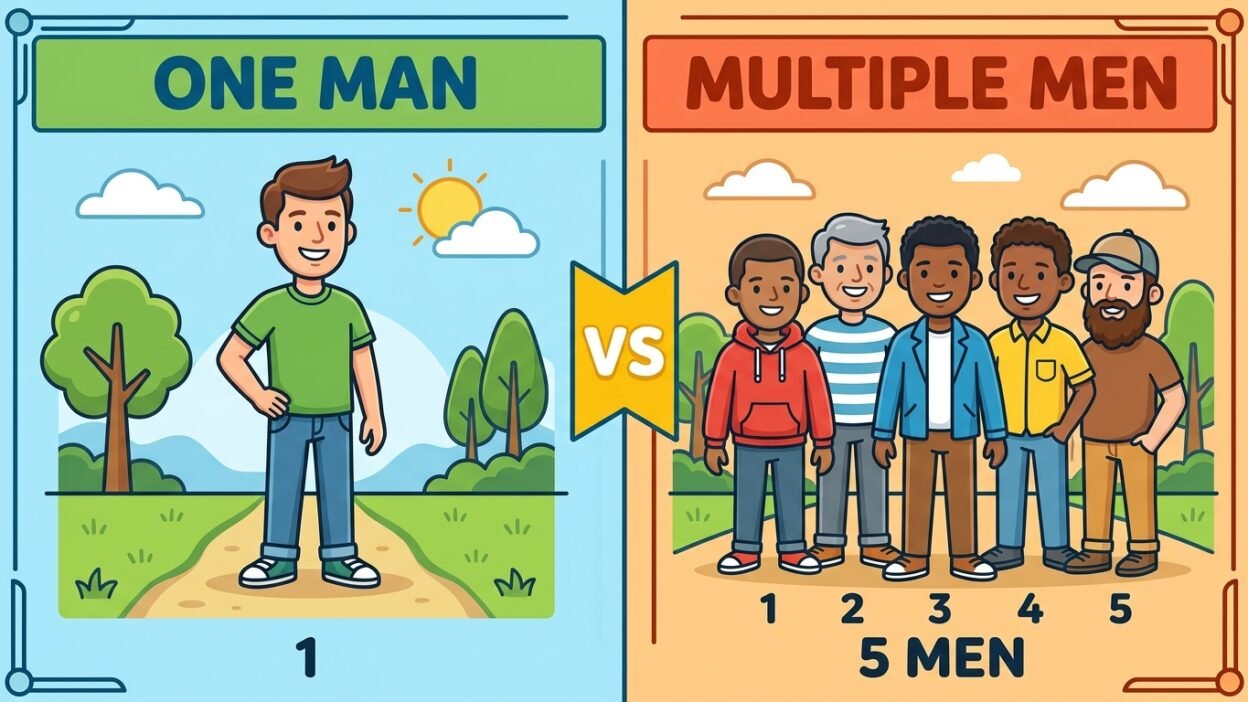
- ✅ Man = one person (singular)
- ✅ Men = more than one person (plural)
- ❌ They are not the same
Examples:
- One man is standing. ✅
- Two men are standing. ✅
👉 One = man | More than one = men
Simple Origin or Background Explanation
Both words come from Old English.
- Man originally meant a person
- Over time, it came to mean an adult male
- Men developed as the plural form (more than one)
👉 English sometimes changes vowels to make plurals:
- man → men
- woman → women
This is why the spelling changes, not just the ending.
Clear Explanation of the Difference
What does “man” mean?
“Man” means:
- One adult male person
It is singular, so it refers to only one person.
Examples:
- The man is walking.
- I saw a man at the door.
- That man is my teacher.
👉 Use it when talking about one person
What does “men” mean?
“Men” means:
- More than one adult male person
It is plural, so it refers to two or more people.
Examples:
- The men are working.
- I saw two men outside.
- Those men are friends.
👉 Use it when talking about more than one person
Key Idea
- Man = one
- Men = many
Comparison Table
| Feature | Man ✅ | Men ✅ |
|---|---|---|
| Meaning | One adult male | More than one male |
| Number | Singular | Plural |
| Usage | One person | Two or more people |
| Example | A man | Many men |
Which One to Use and When
Use “man” when:
- Talking about one person
- Using “a” or “one”
Examples:
- A man is waiting.
- One man called you.
Use “men” when:
- Talking about more than one person
- Using numbers like two, three, many
Examples:
- Two men are talking.
- Many men work here.
Simple Rule
👉 One → man
👉 More than one → men
Common Mistakes People Make
1. Using “man” for plural
❌ Two man are here.
✅ Two men are here.
2. Using “men” for singular
❌ A men is waiting.
✅ A man is waiting.
3. Forgetting verb agreement
- A man is here
- The men are here
👉 Singular = is
👉 Plural = are
4. Spelling confusion
“Men” is not “mans”
👉 The plural is irregular
Everyday Real Life Examples
In Emails
- A man came to see you.
- Two men called earlier.
In News
- A man was rescued.
- Three men were arrested.
On Social Media
- This man is inspiring 💪
- These men are amazing 😄
In Daily Conversation
- I saw a man at the shop.
- I met two men yesterday.
Incorrect Examples (for learning)
- ❌ One men is here
- ❌ Two man are working
Correct forms:
✔️ one man
✔️ two men
Short Learning Section for Students and Beginners
Trick 1: One vs Many
👉 man = one
👉 men = many
Trick 2: Change the Vowel
👉 a → e
man → men
Trick 3: Match the Verb
- man → is
- men → are
Practice Sentences
Fill in the blank:
- One ______ is standing.
- Three ______ are talking.
- A ______ is at the door.
Answers:
- man
- men
- man
FAQ
1. Are “man” and “men” the same?
No, one is singular and the other is plural.
2. What does “man” mean?
It means one adult male.
3. What does “men” mean?
It means more than one adult male.
4. Why does the spelling change?
English uses vowel changes for some plurals.
5. Is “mans” correct?
No, the correct plural is men.
6. Which verb should I use?
- Man → is
- Men → are
7. Is this correct: “two man”?
No, correct: two men
8. What is the easiest way to remember?
👉 One = man
👉 Many = men
Conclusion
The difference between “man” and “men” is very simple.
- Man means one person
- Men means more than one person
👉 One → man
👉 Many → men
With this easy rule, you can use both words correctly and confidently in your daily writing and speaking.