Many learners feel confused about “inquire” and “enquire.” These words look almost the same and have the same meaning, so it can be hard to know which one to use.
The truth is simple: both are correct but they are used differently depending on the type of English and sometimes the situation. This guide will help you understand everything in very easy English.
Quick Answer
- Inquire → more common in American English
- Enquire → more common in British English
Simple rule:
👉 Choose one style and stay consistent
Simple Background
Both words come from the same old word in French and Latin. Over time, English developed two spelling styles:
- American English prefers inquire
- British English prefers enquire
So the difference is not about meaning it is about spelling style.
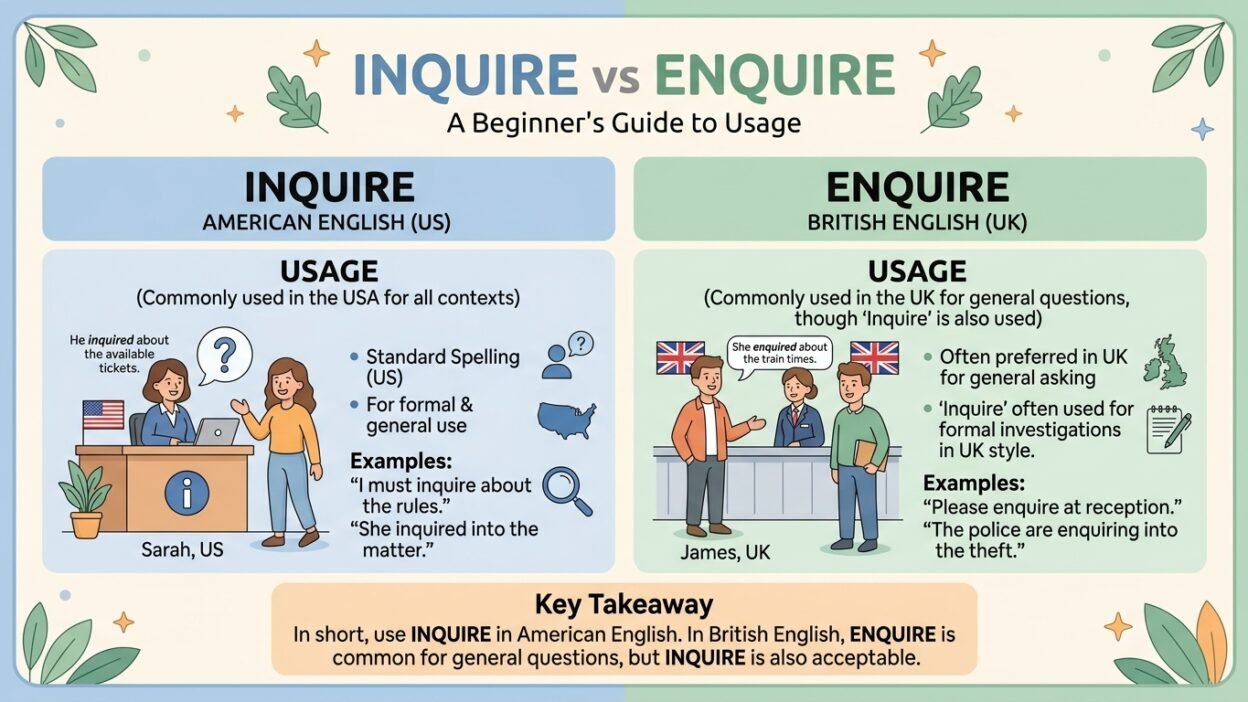
Clear Explanation of the Difference
Let’s make it very simple.
“Inquire”
- Used more in American English
- Often used in formal situations
Examples:
- I want to inquire about the course.
- She inquired about the job.
“Enquire”
- Used more in British English
- Often used in general questions
Examples:
- I want to enquire about your services.
- He enquired about the price.
Important Note
In modern English, many people use both words in the same way. The meaning is the same.
Comparison Table
| Feature | Inquire | Enquire |
|---|---|---|
| Meaning | Ask or get information | Ask or get information |
| English Style | American English | British English |
| Usage | Often formal | Often general |
| Example | Inquire about fees | Enquire about fees |
Which One to Use and When
Use this simple guide:
Use “inquire” when:
- You are writing in American English
- You want a slightly formal tone
Examples:
- I will inquire about the details.
- She inquired at the office.
Use “enquire” when:
- You are writing in British English
- You are asking a general question
Examples:
- I want to enquire about the schedule.
- He enquired at the desk.
Best Advice
👉 Pick one style (American or British) and use it consistently in your writing.
Common Mistakes People Make
Mistake 1: Thinking one is wrong
❌ “Enquire is wrong”
✔ Both are correct
Mistake 2: Mixing styles
❌ Using “inquire” and “enquire” in the same document
✔ Choose one style and stay consistent
Mistake 3: Overthinking the difference
Many learners worry too much.
Remember:
👉 Meaning is the same
Everyday Real Life Examples
In Emails
- “I would like to inquire about your services.”
- “I am writing to enquire about availability.”
In Job Context
- “She inquired about the position.”
- “He enquired about the role.”
In Customer Service
- “Please inquire at the front desk.”
- “Please enquire at reception.”
In Daily Use
- “I need to inquire about the price.”
- “I want to enquire about the timing.”
Short Learning Section for Students and Beginners
Here is an easy way to remember:
Step 1
Think about your English style:
- American → inquire
- British → enquire
Step 2
Remember: meaning is the same
Step 3
Stay consistent
Practice
Fill in the blanks:
- I want to _______ about the course.
- She _______ about the fees.
- Please _______ at the office.
Answers:
(All answers can be either “inquire” or “enquire,” depending on style)
FAQ
1. Is “inquire” correct?
Yes, it is correct and commonly used in American English.
2. Is “enquire” correct?
Yes, it is correct and commonly used in British English.
3. Do they have different meanings?
No, both mean “to ask” or “to get information.”
4. Which one should I use?
Use the one that matches your English style.
5. Is “inquire” more formal?
Sometimes, especially in American English.
6. Can I use both in one sentence?
It is better not to mix them.
7. Which one is more common worldwide?
“Inquire” is more widely used globally, but both are understood.
8. Is this difference important?
It is not very important, but consistency makes your writing better.
Conclusion
The difference between “inquire” and “enquire” is simple:
- Both mean the same thing
- The difference is mainly spelling style
👉 Inquire → American English
👉 Enquire → British English
Choose one style, stay consistent, and you will use these words correctly every time.