Many learners feel confused about “more than” and “more then.” They look very similar, and both use common words, so it is easy to mix them up. This confusion often happens in writing, especially for students and ESL learners.
The truth is simple: one is correct, and the other is usually a mistake.
In this article, you will learn the difference in a very clear and easy way. By the end, you will feel confident using the correct form every time.
Quick Answer
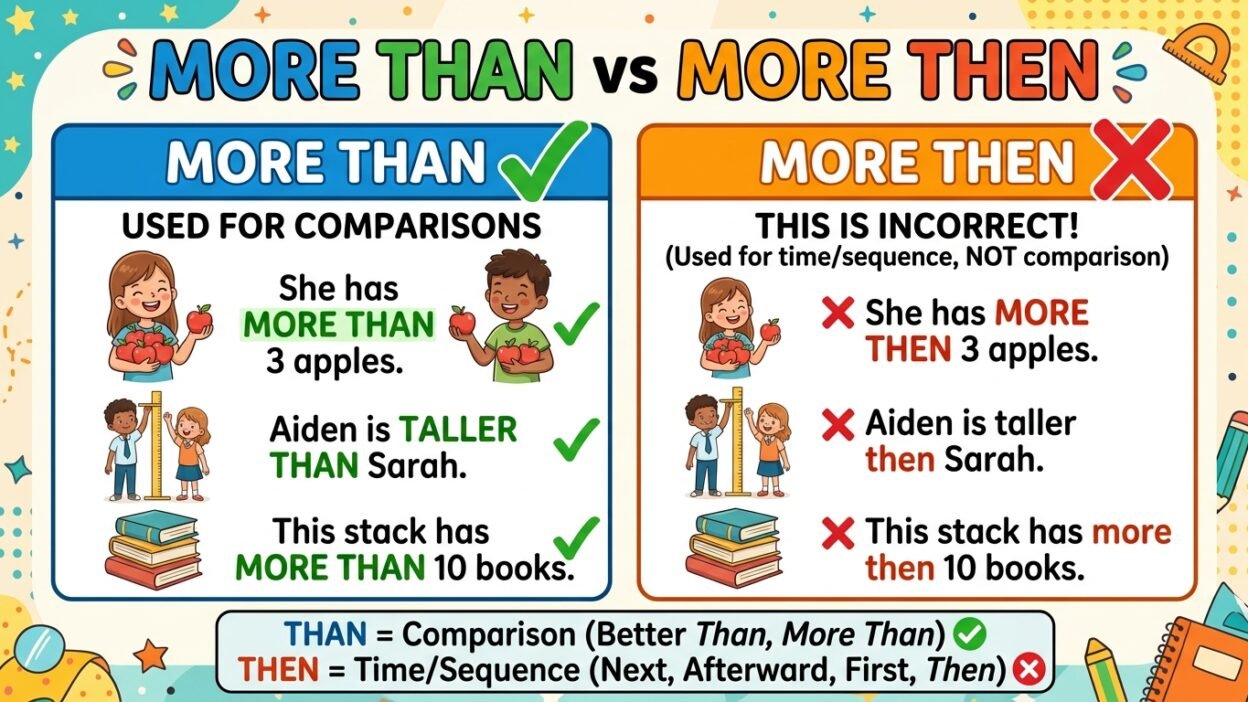
- ✅ More than = correct and commonly used
- ❌ More then = incorrect in most cases
- “Than” is used for comparison
- “Then” is used for time or order
Example:
- She has more than 10 books. ✅
- She has more then 10 books. ❌
Simple Background Explanation
To understand the difference, you need to know the meaning of “than” and “then.”
- Than → used when we compare things
- Then → used when we talk about time or what happens next
These two words sound similar, but they have different jobs in a sentence.
That is why “more than” is correct—because it compares numbers or amounts.
Clear Explanation of the Difference
What does “more than” mean?
“More than” is used to show a larger number, amount, or degree.
It helps you compare one thing with another.
Examples:
- I have more than 5 friends.
- This bag costs more than $20.
- She is more than happy to help.
In all these examples, we are comparing something to a number or level.
What does “more then” mean?
“More then” is almost always wrong.
Why? Because “then” does not work for comparison.
“Then” is used for:
- Time (what happens next)
- Order of actions
Examples of “then”:
- First eat, then sleep.
- I was young back then.
So, when you write “more then,” it mixes two ideas that do not match. That is why it is incorrect.
Comparison Table
| Feature | More Than ✅ | More Then ❌ |
|---|---|---|
| Meaning | Comparison | Incorrect usage |
| Word used | “Than” (for comparison) | “Then” (for time) |
| Correct usage | Yes | No |
| Example | More than 10 people | More then 10 people ❌ |
| Function | Shows greater amount | Does not make sense here |
Which One to Use and When
Use “more than” when:
- Talking about numbers
- Comparing amounts
- Showing something is greater
Examples:
- There are more than 100 students in the class.
- He earns more than his brother.
- This takes more than an hour.
Do NOT use “more then”
Instead, check your sentence:
Ask yourself:
👉 “Am I comparing something?”
- If YES → use than
- If NO → maybe you need then (but not with “more”)
Common Mistakes People Make
1. Spelling mistake
❌ I have more then 5 books.
✅ I have more than 5 books.
This is the most common mistake. People type “then” instead of “than.”
2. Confusing sound
“Than” and “then” sound similar when spoken. That is why learners often mix them up in writing.
3. Using “then” for comparison
❌ She is more then me.
✅ She is more than me.
Always remember: comparison = than
4. Not checking the sentence meaning
Sometimes people do not think about what the sentence means.
Ask:
👉 Am I talking about time or comparison?
This simple check can fix the mistake.
Everyday Real-Life Examples
In Emails
- I received more than 20 emails today.
- We need more than two people for this task.
In News
- The company made more than $1 million last year.
- More than 500 people attended the event.
On Social Media
- This video got more than 10,000 likes!
- I spent more than 3 hours watching shows 😅
In Daily Conversation
- I need more than one cup of coffee today.
- This work is more than I expected.
Incorrect Examples (to learn from)
- ❌ More then 50 people came.
- ❌ I waited more then an hour.
Always replace then → than in these sentences.
Short Learning Section for Students and Beginners
Here is a simple way to remember forever:
Trick 1: The “A” Rule
- ThAn = compArison
Both words have the letter A
So when comparing, use than
Trick 2: The Time Rule
- Then = time or next step
Example:
- Eat first, then drink water.
Practice Sentences
Fill in the blank:
- I have more ___ 10 pens.
- Finish your homework, ___ go outside.
- This costs more ___ $50.
Answers:
- than
- then
- than
FAQ Section
1. Is “more then” ever correct?
No. It is almost always wrong. You should use “more than” instead.
2. Why do people confuse “than” and “then”?
Because they sound similar and are spelled almost the same.
3. What does “more than” mean?
It means a greater number, amount, or level.
4. Can “then” be used for comparison?
No. “Then” is used for time, not comparison.
5. How can I remember the difference easily?
Use this trick:
- “Than” → comparison
- “Then” → time
6. Which is correct: more than 5 or more then 5?
Correct: more than 5
Wrong: more then 5
7. Is this correct: “She is more than happy”?
Yes, it is correct. It means she is very happy.
8. Can I use “then” after numbers?
No. After numbers, always use “than”
Conclusion
The difference between “more than” and “more then” is simple once you understand it clearly.
- More than is correct and used for comparison
- More then is a common mistake
Always remember:
👉 Comparison = than
👉 Time or order = then
With a little practice, you will stop making this mistake and feel more confident in your writing.
Keep it simple, check your meaning, and choose the right word every time.