Many learners get confused between “naive” and “nieve.” These words look similar, and spelling mistakes are common because English vowel patterns can be difficult.
The truth is simple: one spelling is correct, and the other is usually a mistake.
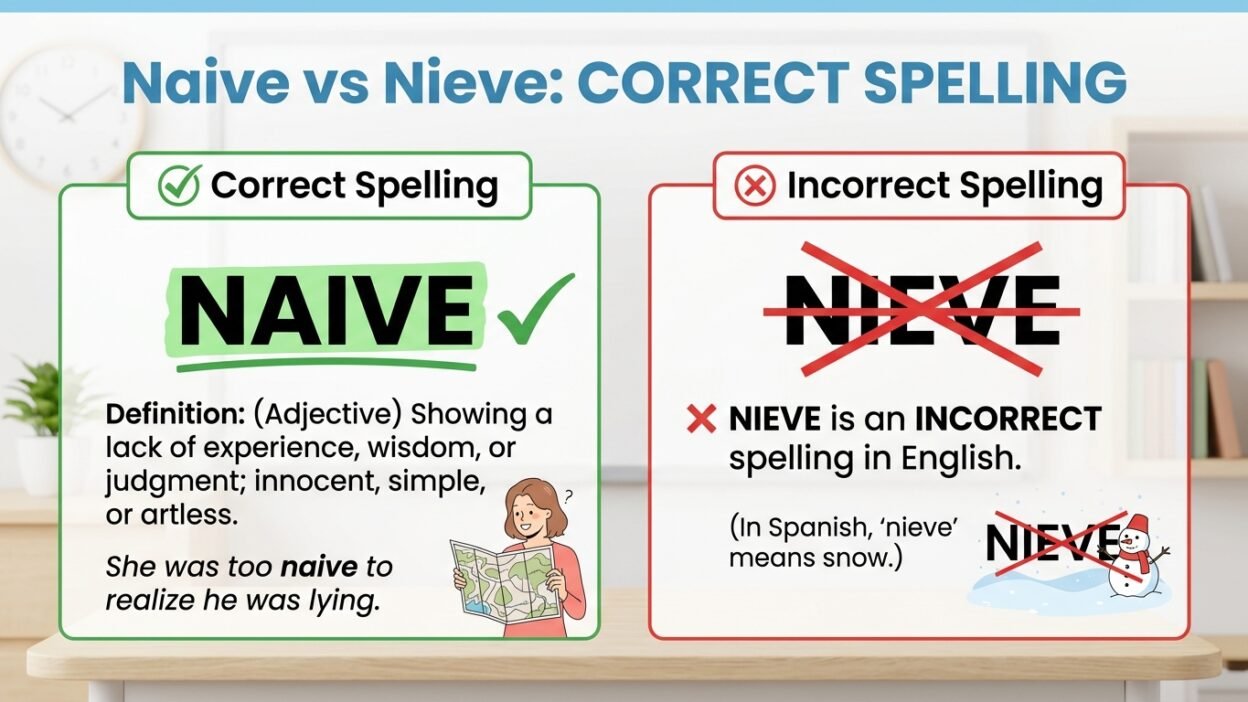
Quick Answer
- Naive = correct spelling
→ means innocent, trusting, or lacking experience - Nieve = incorrect spelling in English
→ usually a spelling mistake
Simple Background
The word “naive” comes from French and became part of English many years ago. It describes someone who is:
- Very trusting
- Innocent
- Not experienced in certain situations
The spelling “nieve” usually happens because people confuse the order of the letters.
Clear Explanation of the Difference
What is “Naive”?
Naive is the correct English word.
It means:
- Innocent
- Too trusting
- Lacking experience
Examples:
- “He was naive and believed every story.”
- “It was a naive mistake.”
Sometimes the word is written with dots:
- naïve
Both forms are accepted in English.
What is “Nieve”?
Nieve is:
- Not the correct English spelling for this word
- Usually a spelling mistake
❌ “She is very nieve.”
✔ “She is very naive.”
Comparison Table
| Word | Type | Meaning | Correct Usage |
|---|---|---|---|
| Naive | Adjective | Innocent or inexperienced | ✅ Yes |
| Nieve | Incorrect | No correct English meaning | ❌ No |
Which One to Use and When
Use naive when:
- Describing someone innocent or inexperienced
- Talking about trust or lack of knowledge
Never use nieve in standard English writing.
Simple Tip to Remember
- Naive = starts with “nai”
Think of:
- na-ive
- not ni-eve
Common Mistakes People Make
1. Mixing letter order
❌ nieve
✔ naive
2. Forgetting pronunciation patterns
English spelling does not always match sound perfectly.
3. Confusing it with other words
People sometimes copy the wrong spelling online.
Everyday Real Life Examples
In Emails
- “It would be naive to ignore the problem.”
In Messages
- “I was naive back then.”
On Social Media
- “Don’t be so naive 😅”
In Daily Life
- “The child seemed naive and trusting.”
- “It was a naive decision.”
Short Learning Section for Students
Here is a simple way to remember:
Step 1: Learn the correct form
- Naive = correct
- Nieve = wrong
Step 2: Practice
- “She sounded naive.”
- “He made a naive mistake.”
Step 3: Use memory trick
Think:
Naive has “ai” together
Step 4: Check spelling carefully
Watch the vowel order.
FAQ
Is “nieve” ever correct in English?
No, it is usually a spelling mistake.
What does “naive” mean?
It means innocent, trusting, or inexperienced.
Why do people spell it “nieve”?
Because they mix up the vowel order.
Is “naïve” also correct?
Yes, both “naive” and “naïve” are accepted.
Is this mistake common?
Yes, very common among learners.
How can I remember easily?
Think: naive = “ai” in the middle.
Can I use “naive” in formal writing?
Yes, it is correct in all types of writing.
Conclusion
The difference between naive and nieve is very simple.
- Naive is the correct spelling and means innocent or inexperienced.
- Nieve is a spelling mistake and should be avoided.
Remember this rule:
Naive uses “ai,” not “ie.”
With this, you can spell the word correctly and confidently every time.