Many learners get confused between “peace of mind” and “piece of mind.” They sound exactly the same when spoken, so it’s easy to mix them up in writing.
But these two phrases are very different. One is correct in most situations, and the other is usually a mistake.
Quick Answer
- Peace of mind = correct and common
→ means feeling calm and relaxed - Piece of mind = usually incorrect
→ only used in a different expression (“give someone a piece of your mind”)
Simple Background
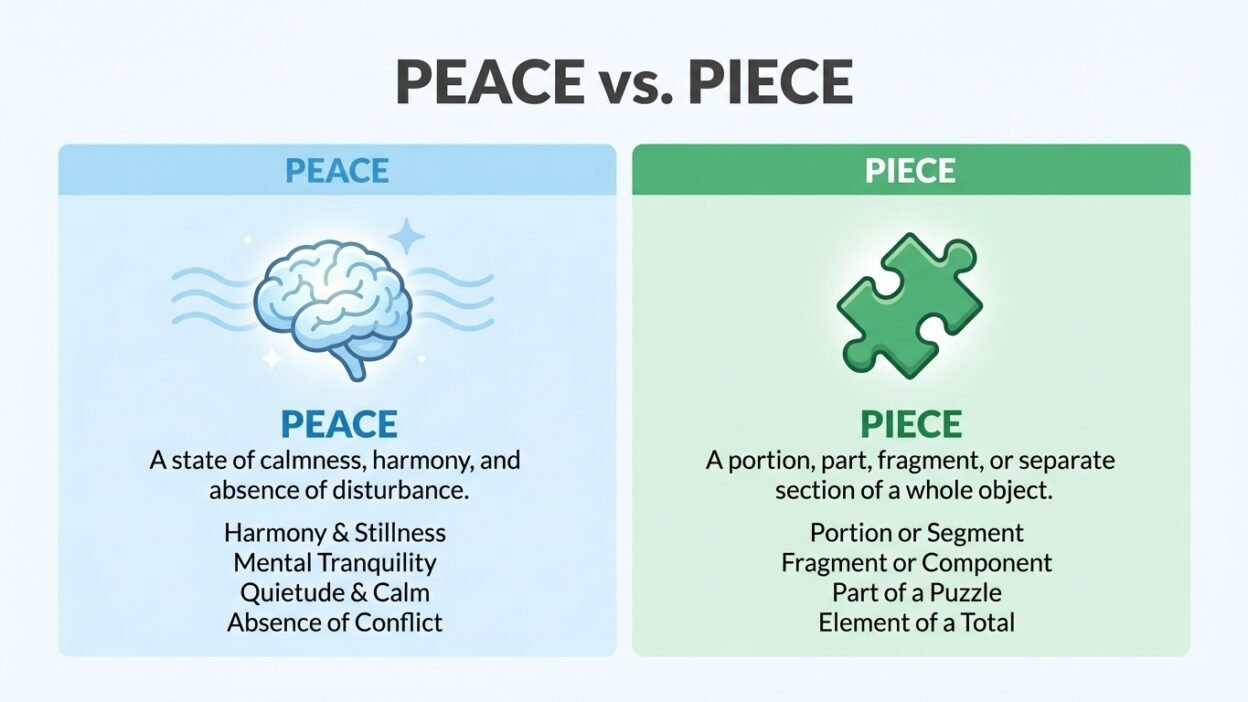
The word peace means calm, quiet, and no stress. So peace of mind means a calm and relaxed feeling inside your mind.
The word piece means a part of something. That is why piece of mind does not make sense when talking about feelings.
However, “piece” is used correctly in another expression, which we will explain below.
Clear Explanation of the Difference
What is “Peace of Mind”?
Peace of mind is the correct phrase for daily use.
It means:
- Feeling calm
- Not worried or stressed
Examples:
- “I feel peace of mind after finishing my work.”
- “This plan gives me peace of mind.”
What is “Piece of Mind”?
Piece of mind is usually incorrect.
But there is a correct expression:
- “Give someone a piece of your mind”
This means:
- To speak angrily or strongly to someone
Example:
- “She gave him a piece of her mind for being late.”
So, “piece of mind” is only correct inside this full expression.
Comparison Table
| Phrase | Type | Meaning | Correct Usage |
|---|---|---|---|
| Peace of mind | Expression | Calm, no stress | ✅ Yes |
| Piece of mind | Incorrect | No clear meaning alone | ❌ No |
| Piece of your mind | Expression | Speak angrily to someone | ✅ Yes |
Which One to Use and When
Use peace of mind when:
- You feel calm and relaxed
- You are talking about comfort or no stress
Use piece of mind only when:
- It is part of the phrase “give someone a piece of your mind”
Simple Tip to Remember
- Peace = calm feeling
- Piece = part of something
Common Mistakes People Make
1. Writing “piece of mind” instead of “peace of mind”
❌ “I want piece of mind.”
✔ “I want peace of mind.”
2. Confusing “peace” and “piece”
They sound the same but have different meanings.
3. Using the wrong phrase in formal writing
“Piece of mind” (alone) is incorrect.
Everyday Real Life Examples
In Emails
- “This solution gives me peace of mind.”
In Messages
- “I just need some peace of mind.”
On Social Media
- “A quiet place gives peace of mind 🌿”
In Daily Life
- “Good planning brings peace of mind.”
- “He gave them a piece of his mind during the meeting.”
Short Learning Section for Students
Here is a simple way to learn:
Step 1: Learn the main phrase
- Peace of mind = correct
- Piece of mind = wrong (alone)
Step 2: Practice
- “I feel peace of mind.”
- “She gave him a piece of her mind.”
Step 3: Use memory trick
Think:
Peace = calm and quiet
Step 4: Double-check
If you mean calm feeling, always use peace.
FAQ
Is “piece of mind” ever correct?
Only in the full expression “give someone a piece of your mind.”
Which phrase is more common?
Peace of mind is very common.
Why do people confuse them?
Because they sound the same when spoken.
Can I use “peace of mind” in formal writing?
Yes, it is correct and widely used.
What does “give a piece of your mind” mean?
It means to speak angrily to someone.
Is this mistake common?
Yes, many learners make this mistake.
How can I remember easily?
Think: peace = calm feeling.
Conclusion
The difference between peace of mind and piece of mind is simple once you understand it.
- Peace of mind means calm and no stress.
- Piece of mind is usually incorrect, except in a specific expression.
Remember this simple rule:
Use “peace” when you want calm, not “piece.”
With this, you can avoid a very common mistake in English.