Many learners feel confused about “anyway” and “anyways.” Both sound natural in speech, and you may hear people use them in movies or casual talk. Because of this, it’s easy to think they are always the same.
But in correct English, there is a clear difference in usage and style.
Quick Answer
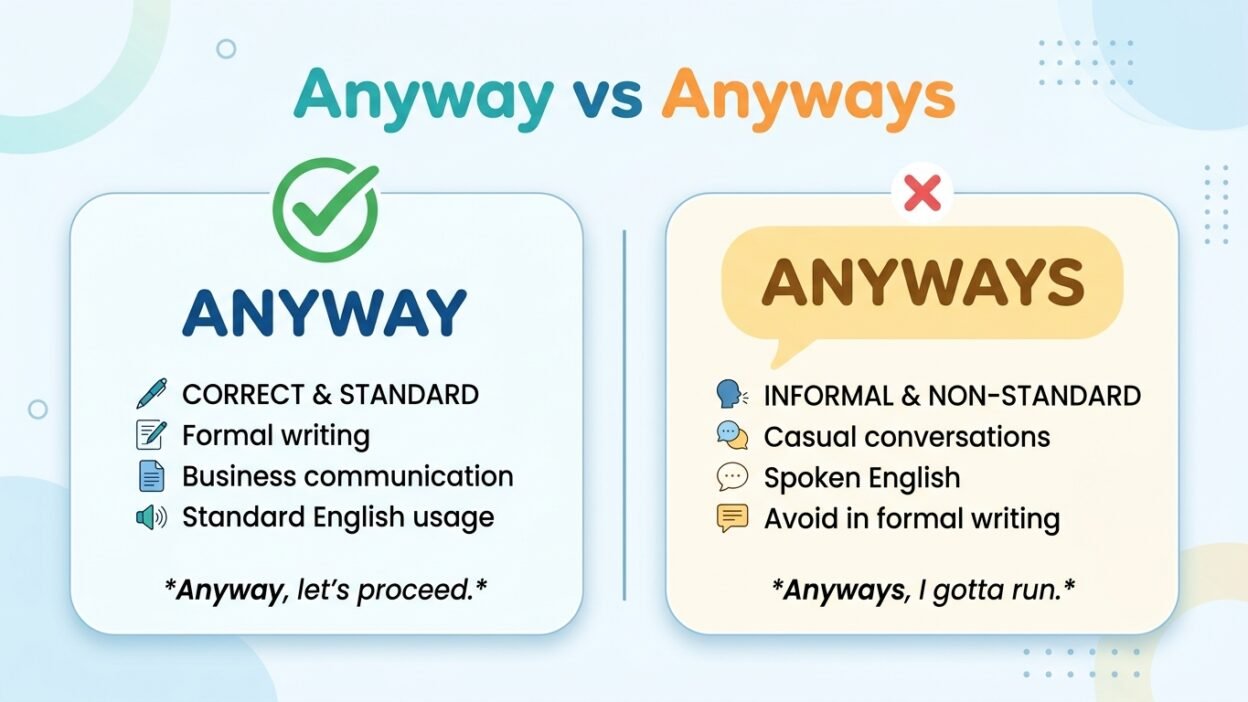
- Anyway = correct and standard
→ used in both formal and informal English - Anyways = informal
→ used in casual speech, not recommended in formal writing
Simple Background
The word anyway has been part of English for a long time and is widely accepted in all types of writing.
The form anyways developed later in casual speech. It is commonly heard in everyday conversation, especially in informal settings, but it is not preferred in standard writing.
Clear Explanation of the Difference
What is “Anyway”?
Anyway is the correct and standard word.
It can mean:
- Despite something
- Returning to a topic
- Changing or ending a conversation
Examples:
- “I was tired, but I went anyway.”
- “Anyway, let’s continue our discussion.”
What is “Anyways”?
Anyways is:
- Informal
- Often used in spoken English
- Not recommended in formal writing
Examples:
- “Anyways, let’s go.”
- “I didn’t like it anyways.”
Comparison Table
| Word | Type | Usage Level | Example Sentence |
|---|---|---|---|
| Anyway | Adverb | Standard | “I’ll do it anyway.” |
| Anyways | Informal | Casual speech only | “Anyways, I’m leaving.” |
Which One to Use and When
Use anyway when:
- Writing emails, essays, or exams
- Speaking in both formal and informal situations
Use anyways when:
- Talking casually with friends
- Writing informal messages (texts, chats)
Simple Tip to Remember
- Anyway = always safe
- Anyways = casual only
Common Mistakes People Make
1. Using “anyways” in formal writing
❌ “Anyways, I would like to explain…”
✔ “Anyway, I would like to explain…”
2. Thinking both are equally correct
“Anyways” is not preferred in standard English.
3. Overusing “anyways”
It can sound unprofessional in serious writing.
Everyday Real Life Examples
In Emails
- “Anyway, I will send the report tomorrow.”
In Messages
- “Anyways, talk to you later.”
On Social Media
- “Anyway, that’s my opinion.”
- “Anyways, moving on 😄”
In Daily Life
- “I didn’t want to go, but I went anyway.”
- “Anyways, let’s eat.”
Short Learning Section for Students
Here is an easy way to remember:
Step 1: Learn the rule
- Anyway = correct
- Anyways = informal
Step 2: Practice
- “I’ll do it anyway.”
- “Anyway, let’s begin.”
Step 3: Use memory trick
Think:
Anyway = one correct way
Step 4: Be careful in exams
Always use anyway in formal writing.
FAQ
Is “anyways” wrong?
Not exactly, but it is informal and not recommended in formal writing.
Which one should I use in exams?
Always use anyway.
Why do people say “anyways”?
It is common in casual speech.
Is “anyway” formal or informal?
It can be used in both.
Can I use “anyways” in emails?
Only in very casual emails, not in professional ones.
Which is more common?
Anyway is more widely accepted.
How can I remember easily?
Think: anyway = correct everywhere.
Conclusion
The difference between anyway and anyways is simple.
- Anyway is the correct and standard word for all situations.
- Anyways is informal and should be used carefully.
If you remember one rule, remember this:
Use “anyway” for correct English, and “anyways” only in casual speech.
With this, you can avoid a common mistake and sound more clear and confident.