
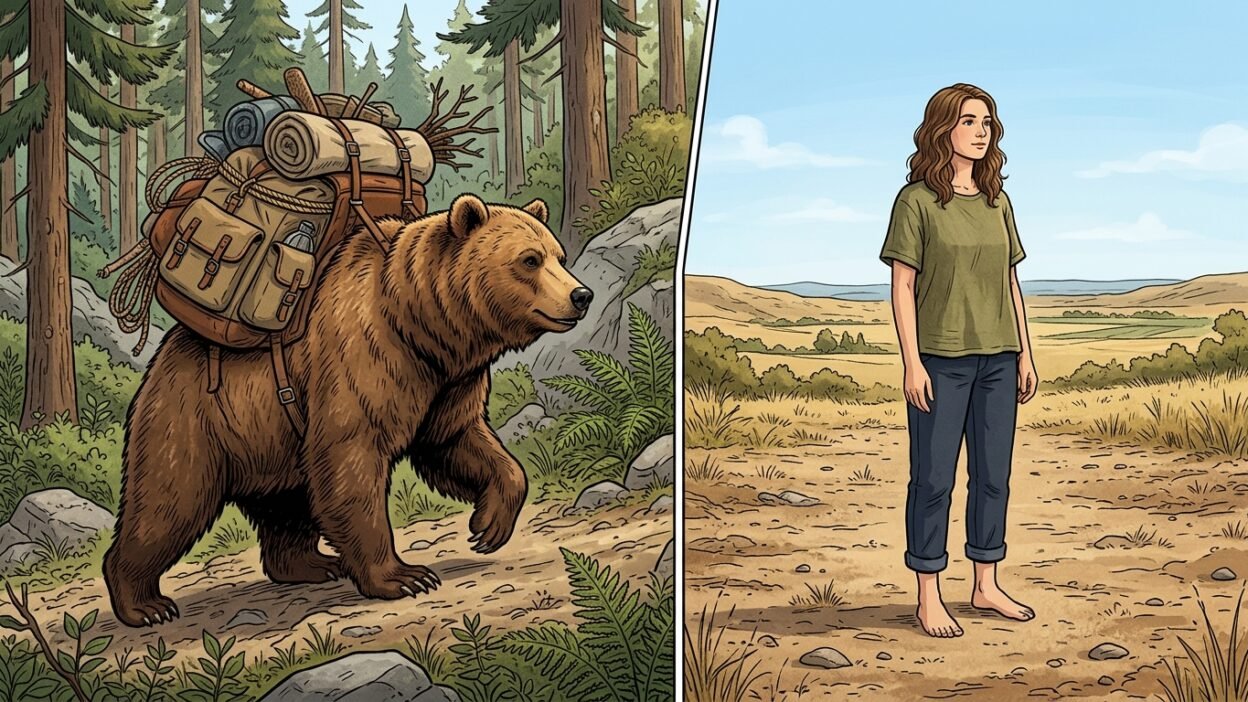
Many English learners feel confused when they see the words “bear” and “bare.” These two words sound exactly the same when spoken, but they have very different meanings.
Because they are pronounced the same, they are called homophones. This makes them tricky, especially for students, beginners, and anyone learning English as a second language.
For example:
- “I can’t bear the pain.”
- “He walked with bare feet.”
Even though the sentences sound similar, the meanings are completely different.
The good news is that once you understand the basic meanings and uses of each word, it becomes very easy to choose the correct one.
This article will explain everything in simple English so you can understand the difference clearly and use both words with confidence.
Quick Answer
Here is the simple difference:
- Bear usually means to carry, to تحمل (endure), or it is the name of an animal.
- Bare means without covering, empty, or exposed.
- Bear is often used as a verb (action word).
- Bare is often used as an adjective (describing word).
Examples:
- I cannot bear this noise.
- The floor is bare.
Simple Origin or Background
Understanding a little background can help make things clearer.
The word “bear”
The word bear has two main meanings in English:
- A verb (action word), meaning:
- to carry
- to support
- to tolerate or endure
- A noun, meaning a large animal (like a brown bear or polar bear)
Examples:
- She bore the weight of the box.
- I can’t bear the heat.
- The bear is a strong animal.
The word “bare”
The word bare comes from a different idea. It means:
- without clothes
- without covering
- empty or simple
Examples:
- He walked on bare feet.
- The room was bare with no furniture.
- She showed her bare hands.
So even though the words sound the same, their meanings come from very different ideas.
Clear Explanation of the Difference
Let’s look at each word more closely.
What “bear” means
Bear is mostly used as a verb.
It can mean:
- to carry something
- to accept or tolerate something difficult
- to support something
Examples:
- I can’t bear this pain.
- She bears a lot of responsibility.
- The bridge can bear heavy weight.
It is often used in emotional or difficult situations.
It can also be a noun:
- The bear lives in the forest.
What “bare” means
Bare is usually an adjective.
It describes something that is:
- uncovered
- empty
- simple
- without extra things
Examples:
- He stood on the bare ground.
- The walls are bare.
- She had bare arms.
It is about how something looks or feels, not an action.
Easy way to remember
- Bear = action or animal
- Bare = no cover
This simple idea can help you quickly choose the right word.
Comparison Table
| Word | Type | Meaning | Example |
|---|---|---|---|
| Bear | Verb / Noun | Carry, تحمل, or animal | I can’t bear the noise. |
| Bare | Adjective | Without covering, empty | The room is bare. |
| Bear | Verb | Support weight | This chair can bear 100 kg. |
| Bare | Adjective | Exposed or open | He has bare feet. |
This table shows how different the meanings are, even though the words sound the same.
Which One to Use and When
Choosing between bear and bare is easier if you follow these simple rules.
Use “bear” when:
- you are talking about carrying or تحمل (enduring) something
- you mean supporting weight
- you are talking about the animal
Examples:
- I can’t bear this stress.
- She bears all the responsibility.
- The table can bear heavy items.
- We saw a bear in the zoo.
Use “bare” when:
- something has no covering
- something is empty or simple
- something is exposed
Examples:
- He walked with bare feet.
- The walls are bare.
- She had bare hands in the cold.
Just remember:
Bear = action or animal
Bare = no cover or empty
Common Mistakes People Make
Here are some common errors learners make.
Mistake 1: Using “bare” instead of “bear”
Incorrect:
- I can’t bare the pain.
Correct:
- I can’t bear the pain.
Why? Because here we mean endure, not uncovered.
Mistake 2: Using “bear” for something uncovered
Incorrect:
- He has bear feet.
Correct:
- He has bare feet.
Why? Because feet are uncovered, not carrying something.
Mistake 3: Confusing the spelling
Because both words sound the same, people often choose the wrong spelling when writing.
Tip:
- Think: bare = no clothes (like “b” for body)
- Think: bear = strong (like the animal)
Mistake 4: Forgetting the animal meaning
Some learners forget that bear is also an animal.
Example:
- The bear climbed the tree.
Everyday Real Life Examples
Let’s see how these words are used in real life.
In emails
Example:
- Please bear with us while we fix the issue.
Another example:
- The room is still bare, and we need furniture.
In news
Example:
- The bridge can bear heavy traffic.
- A wild bear was seen near the village.
In social media
Example:
- “I can’t bear this heat today!”
- “I love walking on the beach with bare feet.”
In daily conversations
Example:
- “Can you bear the noise?”
- “No, it’s too loud.”
Another example:
- “Why are you walking with bare feet?”
- “It feels comfortable.”
These examples show how common both words are in everyday English.
Learning Section for Students and Beginners
Here are some simple tips to help you remember the difference.
Tip 1: Focus on meaning
- Bear = action (carry, تحمل)
- Bare = no cover
Tip 2: Use memory tricks
- Bear → think of a strong animal carrying weight
- Bare → think of no clothes or empty
Tip 3: Practice sentences
Make your own sentences:
- I can’t bear this cold weather.
- The walls are bare.
- She bears responsibility well.
- He walked on bare ground.
Tip 4: Read and listen
You will see these words in:
- books
- conversations
- movies
- daily speech
Practice helps you understand faster.
(FAQ)
1. Do “bear” and “bare” sound the same?
Yes. They are pronounced the same, which is why they are confusing.
2. What does “bear” mean?
It can mean:
- to carry
- to endure
- a large animal
3. What does “bare” mean?
It means:
- without covering
- empty
- exposed
4. Can “bear” and “bare” be used in the same way?
No. Their meanings are different, so they are not interchangeable.
5. Which one is correct: “bear with me” or “bare with me”?
Correct: bear with me
It means “please be patient.”
6. Is “bare feet” correct?
Yes. It means feet without shoes or covering.
7. Can “bear” be used as a noun?
Yes. It is the name of an animal.
8. How can I remember the difference easily?
- Bear = strong, action, animal
- Bare = empty, uncovered
Conclusion
The words bear and bare may sound exactly the same, but their meanings are very different.
Bear is usually about action. It can mean to carry something, to endure something difficult, or it can refer to a strong animal.
Bare, on the other hand, describes something that is uncovered, empty, or exposed.
The key to understanding the difference is simple:
- Bear = action or animal
- Bare = no cover
Once you remember this idea and practice with real examples, you will be able to use both words correctly without confusion.
With time and practice, these words will become easy and natural in your everyday English.