Many learners get confused between “dieing” and “dying.” These words look very similar, and the difference is only one letter. Because of this, people often spell it incorrectly.
The good news is that the rule is simple and easy to remember.
Quick Answer
- Dying = correct spelling
→ means the process of death - Dieing = usually incorrect
→ only used in a very rare technical meaning
Simple Background
The verb “die” follows a special spelling rule in English when adding -ing.
Normally, we just add -ing to a verb:
- play → playing
- read → reading
But with die, the spelling changes:
- die → dying (not dieing)
This happens to make the word easier to read and pronounce.
Clear Explanation of the Difference
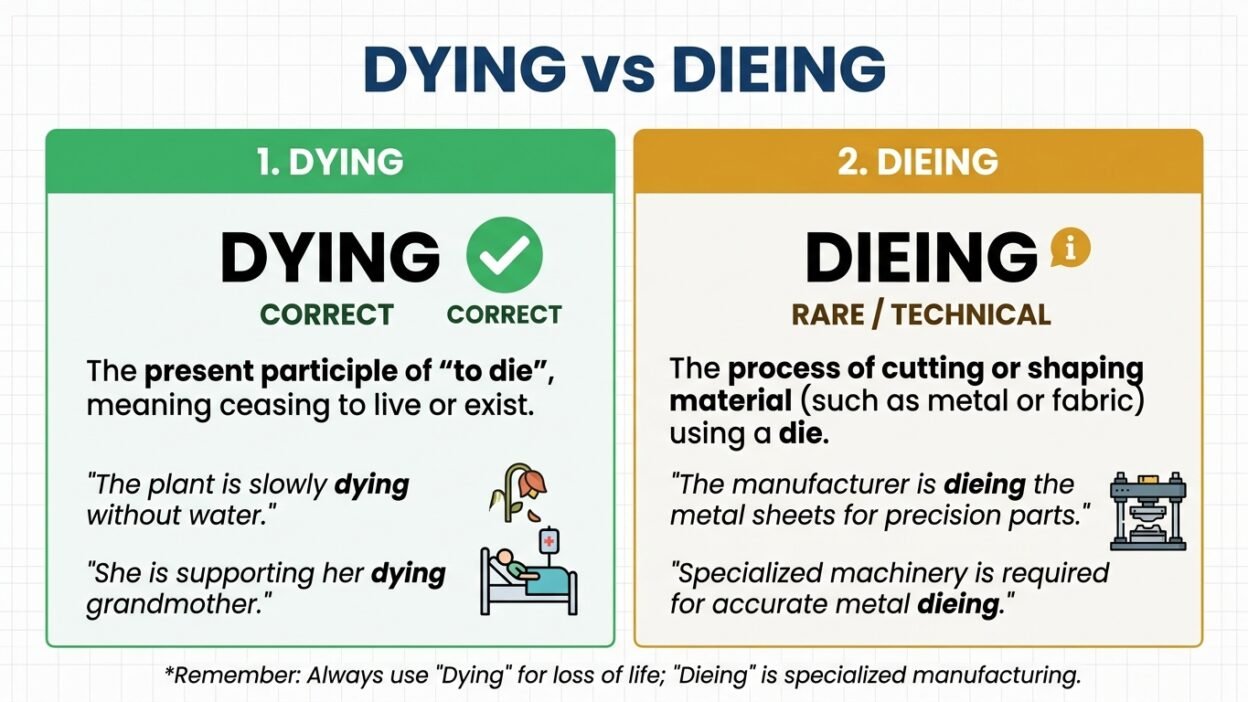
What is “Dying”?
Dying is the correct and common form.
It means:
- The process of death
- Something coming to an end
Examples:
- “The plant is dying.”
- “He is dying of thirst.”
What is “Dieing”?
Dieing is:
- Rare and technical
- Used in manufacturing
It means:
- Cutting or shaping material using a tool called a die
Example:
- “The metal is dieing in the machine.” (technical use)
Most learners will never need this meaning in everyday English.
Comparison Table
| Word | Type | Meaning | Correct Usage |
|---|---|---|---|
| Dying | Verb form | Process of death or ending | ✅ Yes |
| Dieing | Technical | Cutting with a tool (rare) | ⚠️ Rare |
Which One to Use and When
Use dying when:
- Talking about life, health, or something ending
- Writing in normal situations
Use dieing only when:
- Writing about technical manufacturing processes
Simple Tip to Remember
- Die → Dying (change “ie” to “y”)
Think:
Tie → tying
Die → dying
Common Mistakes People Make
1. Writing “dieing” instead of “dying”
❌ “The battery is dieing.”
✔ “The battery is dying.”
2. Not knowing the spelling rule
Many verbs follow normal rules, but “die” is special.
3. Never seeing the rare meaning
Most people don’t know that “dieing” exists in technical use.
Everyday Real Life Examples
In Emails
- “My phone is dying.”
In Messages
- “I’m dying of laughter 😂”
On Social Media
- “This trend is dying fast.”
In Daily Life
- “The plant is dying.”
- “The fire is dying out.”
Short Learning Section for Students
Here is a simple way to learn:
Step 1: Learn the rule
- Die → dying
- Not dieing
Step 2: Practice
- “He is dying.”
- “The light is dying.”
Step 3: Use memory trick
Think:
Drop “ie,” add “y” → dying
Step 4: Double check spelling
Always check in exams and writing.
FAQ
Is “dieing” wrong?
In most cases, yes. It is incorrect for everyday use.
Why is it spelled “dying”?
Because English changes “ie” to “y” before adding “-ing.”
Is “dieing” ever correct?
Yes, but only in rare technical contexts.
Which word is more common?
Dying is very common.
Is this mistake common?
Yes, many learners write “dieing” by mistake.
How can I remember easily?
Think: tie → tying, die → dying.
Should I use “dieing” in exams?
No, always use dying unless it’s a technical topic.
Conclusion
The difference between dieing and dying is simple.
- Dying is the correct and common spelling.
- Dieing is rare and used only in technical situations.
Remember this one rule:
Change “ie” to “y” before adding “-ing.”
With this, you will never make this mistake again.

Austin Brandon serves as both an author and administrator at GrammerPeak. He manages site operations while creating clear, accurate grammar content that helps readers correct mistakes, understand language rules, and write with confidence, precision, and clarity across academic, professional, and everyday English communication.