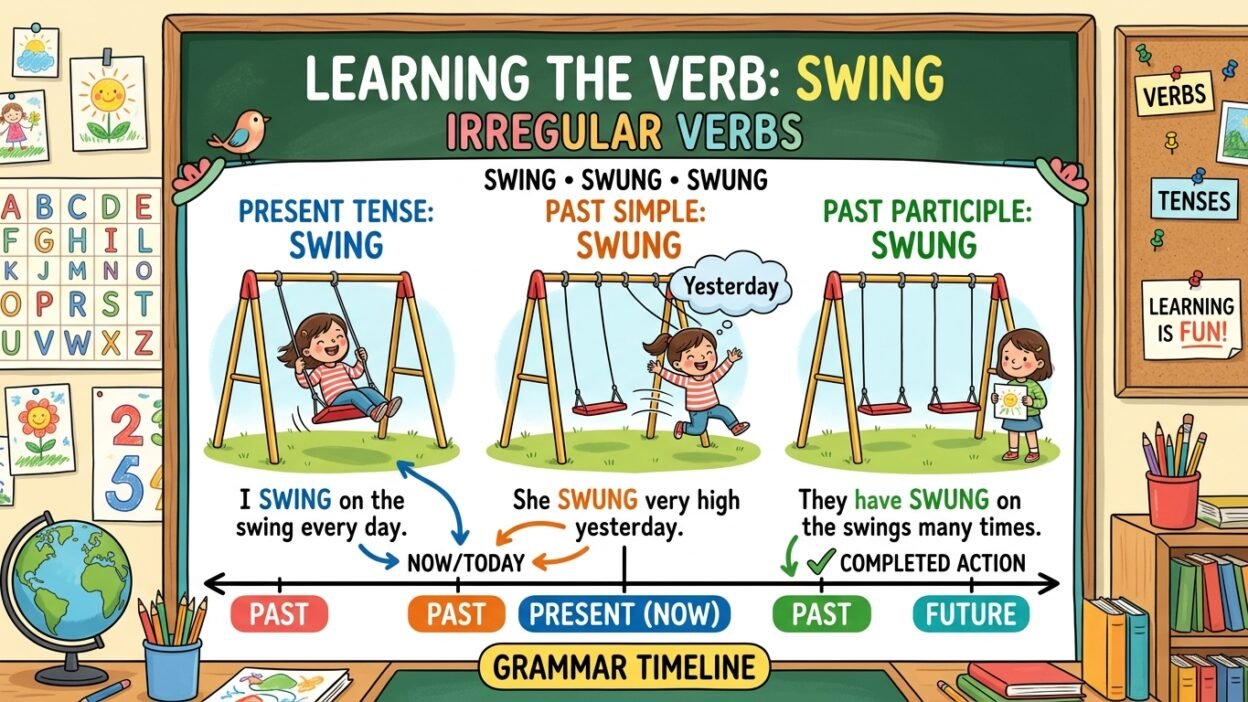
Many English learners wonder whether swing is a regular or irregular verb. The confusion happens because most English verbs form the past tense by adding -ed, but swing follows a different pattern.
If you have ever asked yourself whether the correct form is swinged or swung, you are not alone.
The good news is that the rule is simple.
Swing is an irregular verb, and its correct past tense and past participle form is swung.
In this guide, you will learn the correct verb forms, how to use them, common mistakes to avoid, and plenty of everyday examples.
Quick Answer
- Swing = present tense
- Swung = past tense
- Swung = past participle
- Swing is an irregular verb.
- Swinged is generally incorrect in standard English.
Examples:
- I swing my arms while walking.
- She swung the bat yesterday.
- They have swung from tree branches before.
What Is an Irregular Verb?
An irregular verb does not form its past tense by simply adding -ed.
Examples:
| Present | Past | Past Participle |
|---|---|---|
| Go | Went | Gone |
| Write | Wrote | Written |
| Sing | Sang | Sung |
| Swing | Swung | Swung |
Because swing changes to swung, it is considered an irregular verb.
Understanding the Verb Swing
The verb swing means:
- To move back and forth
- To move in a curved direction
- To hit or move something through the air
- To hang and move freely
Examples:
- Children swing on playground swings.
- The door swings open.
- He swung the golf club.
- The lamp swung from the ceiling.
Verb Forms of Swing
Here are the correct forms:
| Verb Form | Word |
| Base Form | Swing |
| Simple Past | Swung |
| Past Participle | Swung |
| Present Participle | Swinging |
Examples:
- I swing every day.
- Yesterday, I swung the bat.
- I have swung that bat before.
- She is swinging on the playground.
Swing vs Swung
Many learners are unsure when to use swing and swung.
Swing = Present Tense
Use swing for actions happening now or regularly.
Examples:
- I swing my arms when I walk.
- They swing on the playground every day.
- We swing the gate open.
Swung = Past Tense
Use swung for actions completed in the past.
Examples:
- He swung the door shut.
- She swung the racket.
- They swung across the river.
Swung = Past Participle
Use swung with helping verbs.
Examples:
- I have swung that club before.
- She has swung from those ropes.
- They had swung across safely.
Common Mistakes People Make
Mistake 1
❌ He swinged the bat.
✅ He swung the bat.
Mistake 2
❌ She has swinged on that swing before.
✅ She has swung on that swing before.
Mistake 3
❌ We had swinged across the bridge.
✅ We had swung across the bridge.
Mistake 4
❌ The door swinged open.
✅ The door swung open.
Mistake 5
❌ I have swinged a golf club before.
✅ I have swung a golf club before.
Comparison Table
| Feature | Swing | Swung |
| Verb type | Base form | Past and past participle |
| Time | Present | Past |
| Used with helping verbs | No | Yes |
| Example | I swing daily. | I swung yesterday. |
Everyday Real Life Examples
At the Playground
- The children swung for hours.
- They swing every weekend.
In Sports
- He swung the baseball bat.
- She has swung a tennis racket since childhood.
At Home
- The door swung open.
- The lamp swings gently in the wind.
In Conversation
- I swung by your house yesterday.
- We have swung by that café many times.
In News Reports
- The market swung sharply during the week.
- Public opinion has swung toward the new proposal.
Learning Tips for Students and Beginners
Memorize the Three Forms
Learn them together:
- Swing
- Swung
- Swung
Avoid Adding ed
Because swing is irregular, do not use swinged in standard English.
Practice Simple Sentences
Present:
- I swing every day.
Past:
- I swung yesterday.
Perfect Tense:
- I have swung before.
Learn Similar Irregular Verbs
These verbs follow unusual patterns too:
- Sing → Sang → Sung
- Ring → Rang → Rung
- Drink → Drank → Drunk
- Swing → Swung → Swung
Frequently Asked Questions
Is swing a regular or irregular verb?
Swing is an irregular verb.
What is the past tense of swing?
The past tense of swing is swung.
What is the past participle of swing?
The past participle is also swung.
Is swinged a word?
In modern standard English, swung is the accepted form.
How do you use swung in a sentence?
Example:
- He swung the bat with great force.
Can swung be a past participle?
Yes.
Example:
- She has swung from that rope before.
Why is swing irregular?
It developed historically with a different verb pattern instead of taking -ed.
How can I remember the correct form?
Remember:
- Swing
- Swung
- Swung
Think of similar irregular verbs like sing → sang → sung.
Conclusion
Yes, swing is an irregular verb.
Its correct forms are:
- Swing
- Swung
- Swung
Use swing for the present tense and swung for both the past tense and past participle.
Examples:
- I swing every day.
- I swung yesterday.
- I have swung before.
When in doubt, remember that swung is the correct past form, not swinged. Learning this simple pattern will help you use the verb correctly in speaking and writing.