
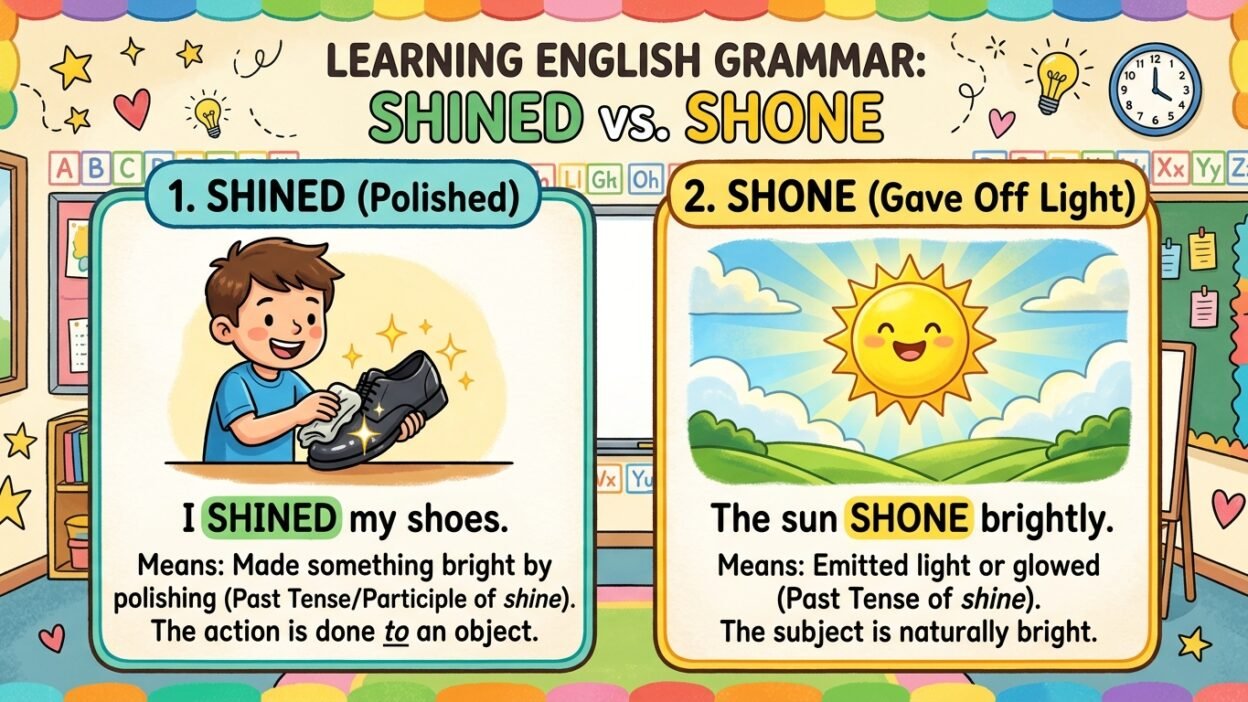
Many English learners get confused between shined and shone because both words are connected to the verb shine.
The confusion becomes even greater because both forms are correct in some situations. Unlike many verbs that have only one accepted past tense, shine can use either shined or shone, depending on the meaning of the sentence.
The good news is that the difference is easy to learn.
In general:
- Shone is usually used when something gives off light.
- Shined is often used when someone causes something to become bright by polishing or cleaning it.
This guide will explain everything in simple English.
Quick Answer
- Shone = usually used when light comes from something.
- Shined = often used when someone polishes or brightens something.
- Both are correct, but they are used differently.
- Shone is more common when talking about natural or emitted light.
Examples:
- The sun shone brightly.
- The stars shone all night.
- He shined his shoes.
- She shined the silver before dinner.
Origin and Background
The verb shine has existed in English for hundreds of years.
It generally means:
- To give off light
- To glow
- To polish something until it becomes bright
Over time, two past forms became common:
- Shined
- Shone
Today, both forms exist, but their usage often depends on the meaning.
Understanding the Difference Between Shined and Shone
The easiest way to remember the difference is to think about the source of the brightness.
Shone = Gave Off Light
Use shone when something naturally produces or reflects light.
Examples:
- The sun shone brightly.
- The moon shone over the lake.
- Her eyes shone with happiness.
- The stars shone throughout the night.
In these examples, the subject is glowing or giving off light.
Shined = Polished or Made Bright
Use shined when someone actively makes something bright.
Examples:
- He shined his shoes.
- She shined the silver tray.
- They shined the car before the parade.
- I shined my boots yesterday.
In these examples, a person is performing the action.
Shined vs Shone Comparison Table
| Feature | Shined | Shone |
|---|---|---|
| Usually means | Polished or made bright | Gave off light |
| Action performed by someone | Yes | Usually no |
| Common with shoes, cars, silver | Yes | No |
| Common with sun, moon, stars | Rare | Yes |
| Example | He shined his shoes. | The sun shone brightly. |
Which One Should You Use and When?
A simple trick is to ask:
Is someone polishing something?
If yes, use shined.
If something is naturally glowing or giving off light, use shone.
Use Shined When:
- Cleaning shoes
- Polishing metal
- Making something brighter
Examples:
- I shined my boots.
- She shined the table.
- He shined the trophy.
- They shined the car.
Use Shone When:
- Talking about sunlight
- Talking about moonlight
- Talking about stars
- Talking about glowing objects
Examples:
- The sun shone through the window.
- The moon shone above the trees.
- The stars shone brightly.
- Her smile shone with confidence.
Common Mistakes People Make
Mistake 1
❌ The sun shined brightly all day.
✅ The sun shone brightly all day.
Mistake 2
❌ The stars shined all night.
✅ The stars shone all night.
Mistake 3
❌ He shone his shoes before work.
✅ He shined his shoes before work.
Mistake 4
❌ She shone the silver tray.
✅ She shined the silver tray.
Mistake 5
❌ The moon shined over the ocean.
✅ The moon shone over the ocean.
Everyday Real-Life Examples
In Daily Conversation
- The sun shone all afternoon.
- I shined my shoes before the meeting.
At Home
- She shined the kitchen sink.
- The light shone through the curtains.
In News Reports
- The sun shone during the ceremony.
- Workers shined the memorial before the event.
In Stories
- The moon shone over the castle.
- The knight shined his armor.
On Social Media
- The stars shone beautifully tonight.
- I shined my car for the weekend.
Learning Tips for Students and Beginners
Remember the Light Rule
Think:
- Natural light = shone
- Polishing = shined
Use Keywords
If you see words like:
- sun
- moon
- stars
- light
you will often use shone.
If you see words like:
- shoes
- boots
- silver
- car
you will often use shined.
Practice Simple Sentences
- The sun shone.
- The moon shone.
- I shined my shoes.
- He shined the car.
Read Real Examples
The more examples you read, the easier it becomes to choose the correct form naturally.
Frequently Asked Questions
Is it shined or shone?
Both are correct, but they are used in different situations.
What is the past tense of shine?
The past tense can be shined or shone, depending on the meaning.
When should I use shone?
Use shone when something gives off light.
When should I use shined?
Use shined when someone polishes or brightens something.
Is “the sun shined” correct?
Most grammar guides prefer:
- The sun shone.
Is “he shone his shoes” correct?
Most grammar guides prefer:
- He shined his shoes.
Which is more common?
Shone is more common when talking about light. Shined is more common when talking about polishing.
How can I remember the difference?
Think:
- Light = shone
- Polish = shined
Conclusion
The difference between shined and shone depends on the meaning of the sentence.
Use shone when something naturally gives off light.
Use shined when someone polishes or makes something bright.
Quick reminder:
- The sun shone. ✅
- The stars shone. ✅
- He shined his shoes. ✅
- She shined the silver. ✅
Remembering the simple rule of light versus polishing will help you choose the correct word every time.

Austin Brandon serves as both an author and administrator at GrammerPeak. He manages site operations while creating clear, accurate grammar content that helps readers correct mistakes, understand language rules, and write with confidence, precision, and clarity across academic, professional, and everyday English communication.