Many English learners get confused between “paid” and “payed.” Since many English verbs simply add “-ed” in the past tense, people often think both spellings are correct.
But in most situations, only one form is correct.
The good news is that the difference is very easy once you know the special meaning of “payed.”
Quick Answer
- Paid = correct past tense of “pay” in normal English
- Payed = rare special word mostly used in sailing
Simple Background
The verb “pay” means:
- To give money
- To give attention
- To return something owed
Over time, English changed the past tense form:
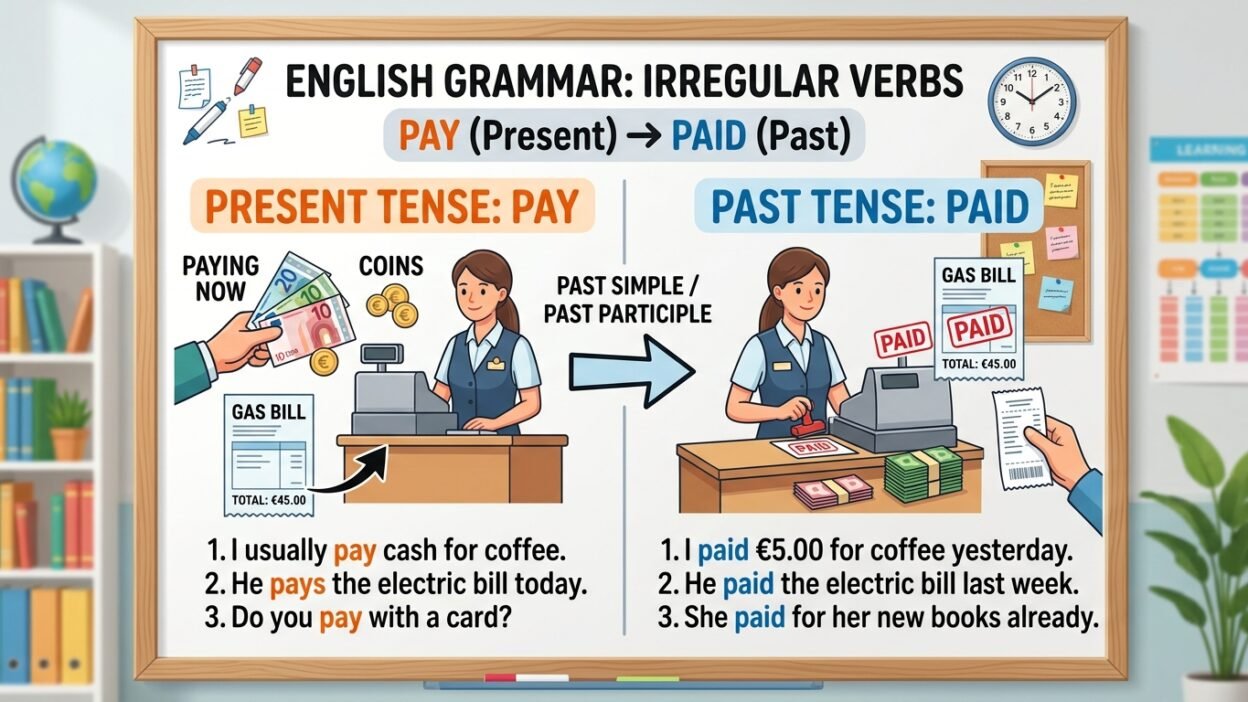
- pay → paid
This is an irregular verb.
The word “payed” exists, but it is usually only used in nautical or rope-related situations.
Clear Explanation of the Difference
What is “Paid”?
Paid is the normal and correct past tense and past participle of “pay.”
Examples:
- “She paid the bill yesterday.”
- “They have paid the rent.”
This is the form used in:
- schools
- business
- daily conversations
- writing
What is “Payed”?
Payed is a rare word with special meanings related to:
- ships
- ropes
- sealing wooden boats with tar
Examples:
- “The sailors payed the rope carefully.”
Most English learners will almost never need this word.
Comparison Table
| Word | Meaning | Common Usage |
|---|---|---|
| Paid | Past tense of pay | Everyday English |
| Payed | Special nautical term | Rare |
Which One to Use and When
Use paid for:
- money
- bills
- salaries
- attention
- costs
- everyday English
Use payed only:
- in rare sailing or nautical contexts
Simple Tip to Remember
- Money or normal situations → paid
- Ships and ropes → payed
Common Mistakes People Make
1. Writing “payed” instead of “paid”
❌ “I payed the fee.”
✔ “I paid the fee.”
2. Thinking all verbs use “-ed”
“Pay” is irregular.
3. Not knowing “payed” is a special term
Most people never use it.
Everyday Real Life Examples
In Daily Life
- “He paid for dinner.”
- “I paid my electricity bill.”
In School
- “She paid attention in class.”
In Business
- “The company paid the workers on time.”
Rare Nautical Example
- “The crew payed the deck seams.”
Short Learning Section for Students
Here is an easy way to remember:
Step 1: Learn the forms
- Pay = present
- Paid = past
Step 2: Practice
- “I pay the bill.”
- “I paid the bill yesterday.”
Step 3: Use memory trick
Think:
Normal English uses “paid.”
Step 4: Ignore “payed” for everyday writing
You probably will not need it.
FAQ
Which is correct: paid or payed?
Usually, “paid” is correct.
Is “payed” wrong?
Not completely, but it is very rare and used in sailing.
What is the past tense of “pay”?
The past tense is “paid.”
Is “pay” a regular verb?
No, it is irregular.
Can I use “payed” in school writing?
No, you should almost always use “paid.”
Why does “payed” exist?
It survived from old nautical English.
How can I remember easily?
Think: money = paid.
Conclusion
The difference between paid and payed is simple once you know their meanings.
- Paid is the normal and correct past tense of “pay.”
- Payed is a rare nautical word.
Remember this easy rule:
For everyday English, always use “paid.”
With this, you can use the correct spelling confidently in writing and conversation.