Many English learners get confused about the past tense of swing. Some people write swinged, while others use swung. Because English has many irregular verbs, it is not always easy to know which form is correct.
The good news is that the answer is simple. Once you understand how the verb works, you can use it correctly in speaking and writing.
This guide explains everything in clear and easy English so you will never be confused about the past tense of swing again.
Quick Answer
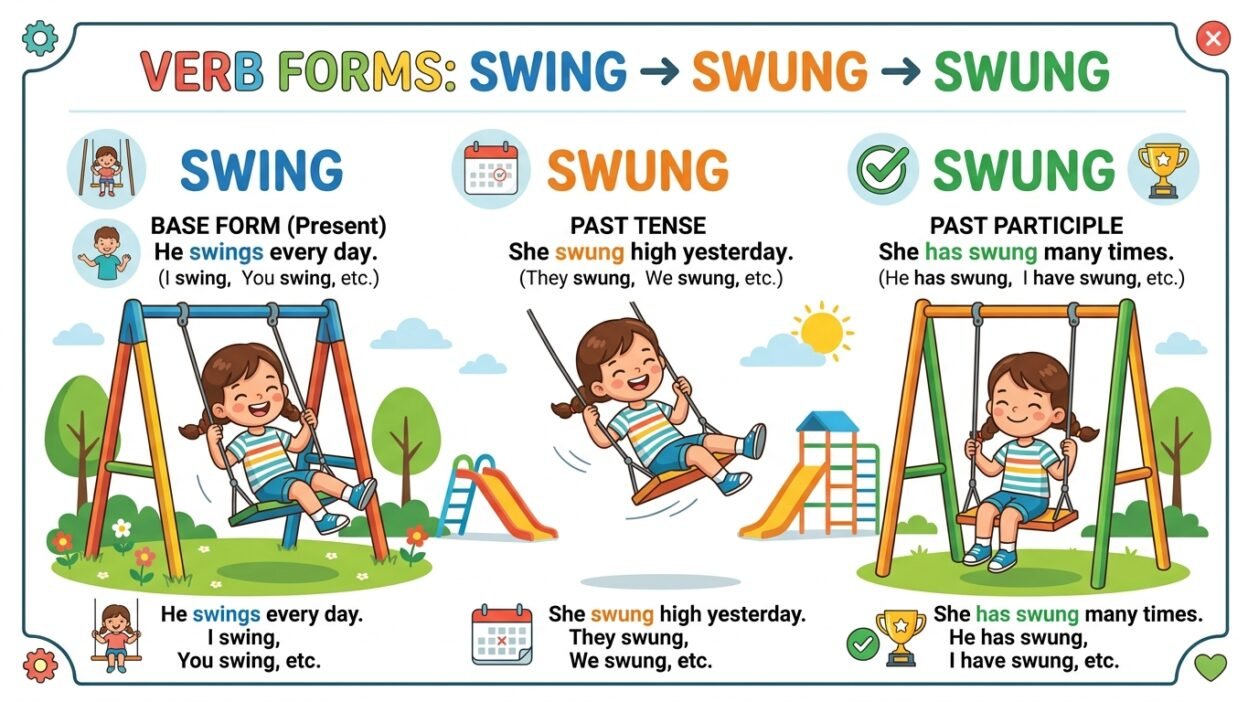
- Swing = present tense
- Swung = past tense
- Swung = past participle
- Swinged = not considered standard English
Examples:
- I swing the bat every day.
- Yesterday, I swung the bat.
- I have swung that bat many times.
✅ Correct: She swung the door open.
❌ Incorrect: She swinged the door open.
Simple Origin or Background Explanation
The word swing comes from very old forms of English. It belongs to a group of verbs that change their vowel sound instead of simply adding -ed.
Many common English verbs work this way:
| Present | Past |
|---|---|
| Sing | Sang |
| Ring | Rang |
| Begin | Began |
| Swing | Swung |
Because English learners often learn that past tense is made by adding -ed, they may naturally think swinged is correct. However, swing is an irregular verb, so it follows a different pattern.
Over time, swung became the accepted past tense form and remains the standard choice today.
Understanding the Difference
The confusion usually comes from the difference between swung and swinged.
Swung
Swung is the correct past tense and past participle form of swing.
Examples:
- The child swung on the playground swing.
- He swung the golf club.
- She has swung from one opinion to another.
Swinged
Swinged is generally considered incorrect in modern standard English.
Examples:
❌ He swinged the bat.
✅ He swung the bat.
❌ The door swinged shut.
✅ The door swung shut.
In everyday writing, schoolwork, business communication, books, and news articles, swung is the form you should use.
Comparison Table
| Form | Correct? | Usage |
|---|---|---|
| Swing | Yes | Present tense |
| Swung | Yes | Past tense |
| Swung | Yes | Past participle |
| Swinged | No | Nonstandard and usually incorrect |
Verb Forms of Swing
| Tense | Form |
|---|---|
| Base Verb | Swing |
| Simple Past | Swung |
| Past Participle | Swung |
| Present Participle | Swinging |
Examples:
- I swing every morning.
- I swung yesterday.
- I have swung before.
- I am swinging now.
Which One to Use and When
Use swing when talking about the present.
Examples:
- I swing the racket every weekend.
- They swing their arms while walking.
Use swung when talking about something that happened in the past.
Examples:
- She swung the door open.
- The monkey swung from branch to branch.
Use swung after helping verbs such as has, have, or had.
Examples:
- He has swung the bat many times.
- We had swung across the river before sunset.
Never use swinged in normal English writing.
Common Mistakes People Make
Mistake 1: Adding -ed Automatically
Many learners assume every verb follows the same rule.
❌ I swinged the bat.
✅ I swung the bat.
Mistake 2: Using Swing Instead of Swung
❌ Yesterday I swing the bat.
✅ Yesterday I swung the bat.
Because the action happened yesterday, the past tense is needed.
Mistake 3: Using Swung as Present Tense
❌ Every day I swung on the playground.
✅ Every day I swing on the playground.
The sentence talks about a regular habit, so present tense is needed.
Mistake 4: Wrong Past Participle
❌ I have swinged on that swing before.
✅ I have swung on that swing before.
After have, has, or had, use swung.
Everyday Real Life Examples
In Emails
- I swung by your office yesterday.
- The meeting schedule swung in our favor.
In News Writing
- The election results swung toward the leading candidate.
- The market swung sharply during trading.
On Social Media
- Just swung by my favorite coffee shop.
- We swung into town this afternoon.
In Daily Conversations
- He swung the bag over his shoulder.
- The child swung happily at the park.
- She swung the gate open.
- They swung around the corner.
In Sports
- The baseball player swung the bat.
- She swung the tennis racket perfectly.
- The golfer swung with confidence.
Around the Home
- The door swung open.
- The lamp swung from the ceiling.
- He swung the hammer carefully.
Short Learning Section for Students and Beginners
A simple trick can help you remember the correct form.
Think of these three forms together:
- Sing → Sang
- Ring → Rang
- Swing → Swung
The word swing changes inside the word instead of adding -ed.
Try these practice sentences:
- Yesterday I _____ the bat.
- The child _____ on the playground.
- She has _____ that racket before.
Answers:
- swung
- swung
- swung
If you remember that swung works for both the past tense and the past participle, you will avoid most mistakes.
FAQ
What is the past tense of swing?
The past tense of swing is swung.
Is swinged a real word?
Some dictionaries may record it historically or in very limited situations, but it is not the standard past tense used in modern English.
Is it swung or swinged?
Swung is the correct choice in standard English.
What is the past participle of swing?
The past participle is swung.
Example: I have swung on that rope before.
Why doesn’t swing become swinged?
Because swing is an irregular verb. Irregular verbs do not always add -ed to form the past tense.
Can I use swung in formal writing?
Yes. Swung is correct in formal, academic, professional, and casual writing.
What is the present participle of swing?
The present participle is swinging.
Example: The children are swinging in the park.
How can I remember the correct form?
Remember this pattern:
- Swing → Swung
- Ring → Rang
- Sing → Sang
The verb changes form instead of adding -ed.
Conclusion
The past tense of swing is swung, not swinged. Since swing is an irregular verb, it does not follow the usual -ed rule. The word swung is used both as the simple past tense and the past participle.
Remember these forms:
- Swing = present tense
- Swung = past tense
- Swung = past participle
- Swinged = generally incorrect in modern English
Once you learn this simple pattern, using swing correctly becomes easy in conversations, emails, school assignments, social media posts, and everyday writing.